

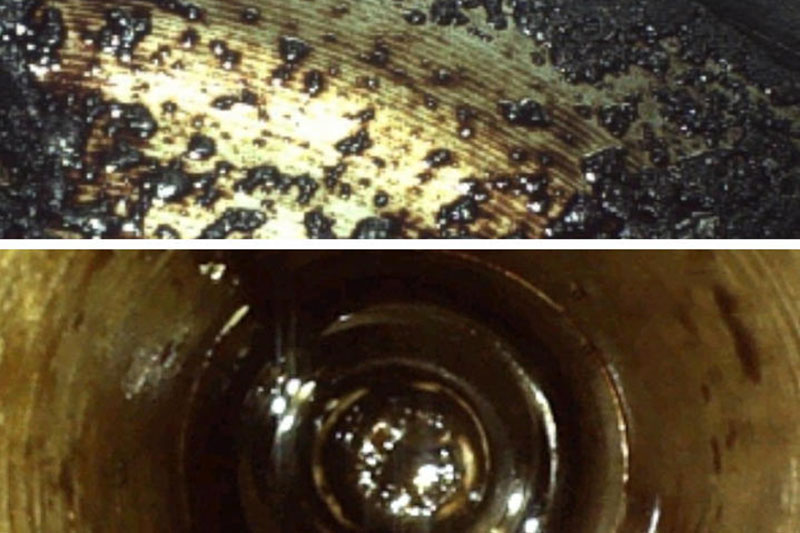
Any mechanic who has worked inside an engine knows the truth: the biggest enemy of an automotive Borescope isn't darkness—it's oil. Whether it's oil inside the cylinders, residue on the valves, or a submerged oil pan, the moment the probe enters, it's instantly coated. Within seconds, the image becomes blurry, tinted yellow or brown, and completely unreadable. Wipe it clean, reinsert it, and the same thing happens again.
During a typical inspection, the probe gets wiped more often than the screen is viewed. That’s when it becomes clear: a truly reliable automotive Borescope must be built to withstand oil.
I. Why Do Ordinary Borescopes Struggle with Oil?
Critical components such as engines, transmissions, and turbochargers are constantly exposed to oil. Engine oil, transmission fluid, hydraulic oil, and hot oil mist create a challenging environment for standard Borescopes:
Oil on the Lens: Oil coats the lens immediately, causing blurry images—rendering even the highest-resolution camera useless.
Oil Ingress into the Probe: Low-quality devices lack proper sealing. Oil seeps through tiny gaps and contaminates the CMOS sensor, permanently damaging the scope.
Corrosion and Material Degradation: Standard PVC sheaths become brittle and crack after repeated exposure to oil, often failing within months.
Common complaints from mechanics—such as “the image gets foggy after a few months” or “photos always look hazy”—aren't due to a lack of skill. They stem from equipment that simply can’t handle the environment.
Professional-grade automotive Borescopes must deliver consistent, clear imaging in oil-rich environments. Anything less leads to unreliable results.
II. Built for Oil Resistance: Coantec ME+ Series
The Coantec ME+ series was designed specifically to solve this problem. It’s not just about applying an oil-resistant coating—it’s a complete redesign of materials and structure tailored for real-world automotive use.
1. Dual-Layer Isolation for Enhanced Protection
The ME+ features a dual-layer isolation structure with an integrated buffer zone. Think of it as two protective layers around the probe: the outer layer blocks oil from reaching sensitive components, while the inner layer provides a secondary barrier. Even when fully submerged in oil, the lens and image sensor remain clean and functional. For an Borescope operating in oily environments, this level of protection is essential.
2. Tungsten Alloy Braided Sheath for Durability
The probe is encased in a tungsten alloy wire braided sheath. Tungsten alloy offers excellent corrosion resistance—engine oil, transmission fluid, and coolants have little to no effect on it. The braided structure maintains flexibility, allowing the probe to bend and retract repeatedly without hardening or cracking. This ensures long-term durability that ordinary Borescopes cannot match.
Additionally, the probe meets IP67 standards, meaning it’s not only oil-resistant but also waterproof and dustproof. Whether inspecting a wet transmission or a leaking radiator, the ME+ handles it with ease. The lens also features an oleophobic coating that reduces oil adhesion, keeping images clearer for longer.
3. Extended Equipment Lifespan
Standard Borescopes often fail within months due to sheath hardening, cracking, or seal failure in oily environments. In contrast, the ME+’s tungsten alloy braided tubing significantly extends the tool’s service life—lasting five years or more with proper use. Over time, this translates to lower replacement costs and better return on investment.
III. Stable Imaging Builds Customer Trust
Consider carbon deposit cleaning services. Mechanics must document the condition before and after cleaning to show vehicle owners the results. If the Borescope lens is smeared with oil, the "before" images are unclear and the "after" images don’t show the improvement. Without clear visuals, it’s difficult for customers to verify the quality of the work.
The ME+ ensures sharp, reliable images in both conditions. The thickness of carbon deposits before cleaning and the clean metal surface afterward are immediately visible. This clarity helps automotive professionals demonstrate value, justify services, and build customer confidence.
Copyright © 2025. Coantec Ltd. All rights reserved. sitemap