

Ⅰ. What Is a Rigid Borescope
A rigid borescope is an optical inspection instrument built around a rigid shaft, used to transmit internal images to the human eye or a display without disassembling the inspected object. Based on imaging principles, rigid borescopes fall into two primary technical categories in practical engineering:
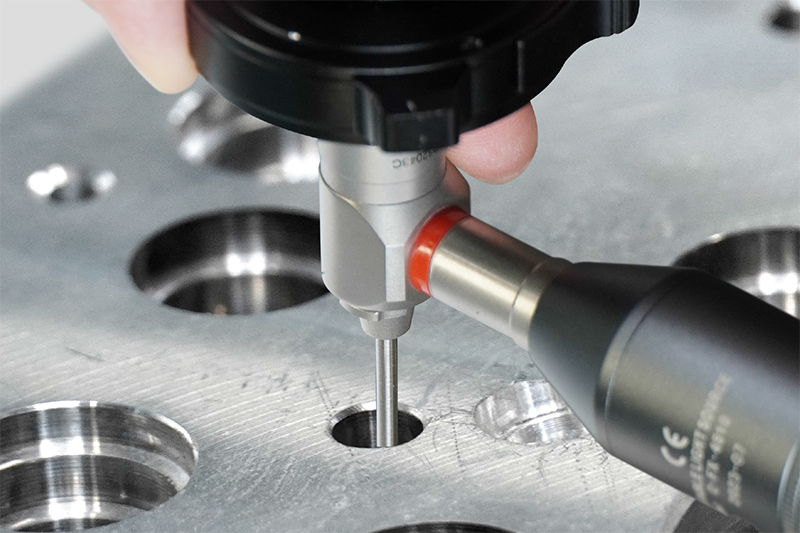
1. Pure lensbased rigid borescope: This type relies entirely on a series of precisely arranged relay lenses (rod lenses) inside to transmit the image. Light reflected from the target surface enters the objective and travels through the lens train in a straight optical path, relayed segment by segment, finally emerging from the eyepiece. The operator looks directly into the eyepiece and sees a true optical image of the inspected area, without any photoelectric conversion or screen display. The key advantages of this rigid borescope are zero image latency, no pixel limitation, and color fidelity and resolution governed entirely by lens quality rather than sensor specifications.
2. Electronic cameratype rigid borescope: This type houses a miniature camera at the tip of the rigid shaft. The camera captures images and transmits them via internal cables to an external processing unit, which displays a digital picture on a screen. The critical innovation here is that the camera can be steered. Through mechanical or motorized mechanisms, the front lens deflects to different angles, allowing the operator to scan surrounding areas in various directions while keeping the shaft stationary. This rigid borescope overcomes the "fixed viewing direction" limitation of pure optical solutions, combining the positioning reliability of a rigid shaft with viewingangle flexibility.
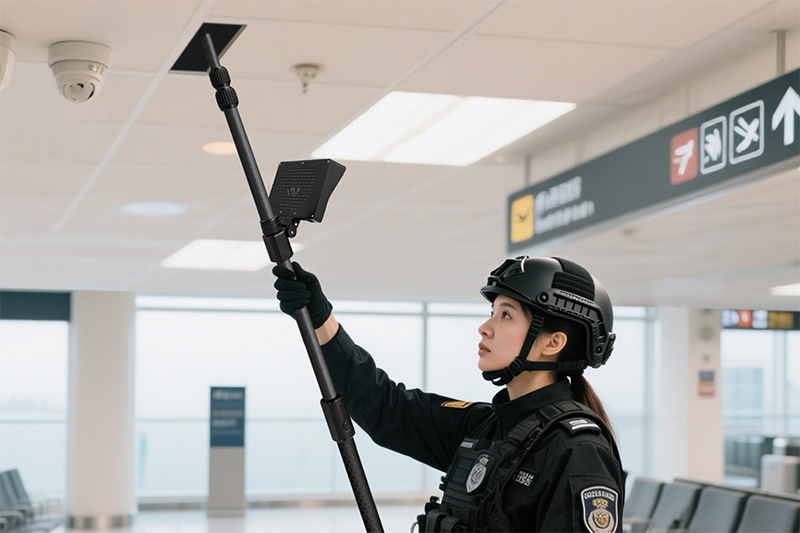
3. In addition, the electronic cameratype platform has spawned an even more portable design: the rigid shaft is divided into multiple telescoping sections of progressively smaller diameters, using a nestedtube structure. When fully collapsed, the rigid borescope condenses into a compact short rod, easy to carry. When extended, the sections are pulled out and locked into place, forming a fulllength rigid probe; some models can reach several meters or even over ten meters. This retractable rigid borescope maintains straightline rigidity while vastly improving storage and transportation experience, making it an excellent fit for fieldwork requiring deep access but where carrying a single long rod is impractical.
Electronic cameratype rigid borescopes also typically feature LED lights integrated around the camera tip, eliminating the need for an external cold light source and fiber optic light guide, which results in a more selfcontained system.
Ⅱ. Application Areas of Rigid Borescopes
Regardless of the imaging principle, the common prerequisite for any rigid borescope is that the inspection path must remain straight. Typical applications include:
Straight tube & bore inspection: Using a pure lensbased rigid borescope to inspect gun barrel bores for wear, rust, and carbon fouling.
Aerospace engines: An electronic steering rigid borescope, once inserted into a turbine inspection port, can rapidly scan surrounding blades by rotating the camera without pulling the shaft out.
Automotive cylinder oil galleries: Retractable rigid borescopes are easily carried right to the production line; once extended section by section, they inspect deep holes for burrs and debris.
Injection mold cooling channels: A smalldiameter rigid borescope is inserted through ejector pin holes to confirm that cooling channels are free of blockages.
Power bus ducts & GIS equipment: Inspecting long, straight bus ducts for foreign objects requires rigid borescopes with extended working lengths.
Medical devices & precision manufacturing: Surgical luminal instruments and the hidden interior spaces of timepieces can be examined with smalldiameter pure lens rigid borescopes to achieve ultimate clarity.
Ⅲ. Rigid Borescope vs. Flexible Borescope Comparison
Comparison Criteria | Rigid Borescope (Pure Optical Lens Type) | Rigid Borescope (Electronic Camera Type) | Flexible Borescope (Fiberscope / Video Scope) |
Imaging Principle | Linear relay via rod lens chain, direct observation through eyepiece | Miniature camera at the front of the probe, electronic signal transmitted to screen | Image transmission via fiber optic bundle (fiberscope) or front-mounted camera (video scope) |
Insertion Tube Structure | Single-piece stainless steel straight tube with no moving parts | Rigid probe body, front camera can articulate; some models feature telescoping design | Flexible braided outer sheath, with built-in articulated joints and control cables |
Path Requirements | Must be straight and unobstructed | Must be straight and unobstructed | Can navigate bends, obstacles, and complex internal cavities |
Image Quality | ★★★★★ No pixel limit, no fiber grid pattern; resolution and color reproduction reach optical limits | ★★★★☆ Digital image, limited by camera sensor specifications; stable and solid picture quality | ★★★☆☆ Fiberscopes suffer from honeycomb grid effect; video scope image quality is affected by fiber/cable attenuation |
Viewing Angle Flexibility | Fixed viewing direction (0° direct view / 90° side view), cannot be adjusted | Camera can be rotated mechanically/electrically; full 360° view without moving the probe | 2-way or 4-way articulation, allowing active adjustment of probe orientation |
Mechanical Durability | ★★★★★ Fully metal-sealed, impact and drop resistant, high temperature and oil resistant; almost no failure-prone parts | ★★★★☆ Robust probe body; articulation mechanism adds slight complexity, still far more durable than flexible scopes | ★★★☆☆ Outer sheath prone to wear; control cables are susceptible to fatigue fracture over time; articulated joints are fragile |
Operation Difficulty | ★★★★★ Insert and view instantly; zero training required | ★★★★☆ Intuitive probe operation; camera articulation requires minimal adaptation | ★★★☆☆ Joystick control requires training to build muscle memory |
Working Length | Typically ≤ 2m | Typically ≤ 2m; telescoping versions can reach several meters | Up to 30m or longer |
Portability | Long probe is inconvenient to carry | Telescoping design is extremely compact when retracted, balancing long working distance and portability | Coilable design, relatively portable |
Illumination Method | Requires external cold light source, delivered to the tip via light guide fiber bundle | Integrated LED light beads at the front; no external light source needed | Usually integrated LED, or guided via fiber optic bundle |
Digital Capability | No native digital output; requires camera adapter for indirect photography | Native support for photo, video recording, and screen display | Native support for video scopes; fiberscopes require external adapter |
Cost Range | Lowest; most economical at equivalent optical quality | Medium; lower than flexible video scopes of the same specification | Highest; complex structure and functionality correspond to high price |
Maintenance | Only lens cleaning required; virtually zero maintenance | Clean lenses and telescoping locking mechanism; minimal maintenance | Requires regular articulation calibration; control cables may need factory replacement |
Typical Failure Modes | Lens displacement due to extreme impact | Articulation mechanism failure, seal failure | Fiber breakage, control cable fatigue, outer sheath wear |
Best Application Scenarios | High-definition visual inspection of gun barrels, hydraulic cylinders, and straight bore interiors | 360° inspection of straight bore walls + digital recording | Bent pipes, coiled tubes, complex cavities, long-distance pipelines |
Ⅳ. How to Choose a Rigid Borescope
Determine your imaging needs first: If you require extreme optical resolution and do not need photo documentation, a pure lensbased rigid borescope is the ideal choice. If you need video recording and multiperson screen viewing, choose an electronic cameratype rigid borescope.
Evaluate viewing angle requirements: When the target area extends beyond the straightahead view and requires looking around, select a rigid borescope with a steerable camera. If you only need to look straight down the bore, a fixeddirection rigid borescope is simpler and has fewer potential failure points.
Consider access depth: For insertion depths up to 1 m, a standard rigid borescope will suffice. For depths over 2 m and where you want to minimize transport length, a retractable rigid borescope is recommended. For depths exceeding 3 m or any scenario involving bends, do not use a rigid borescope; a flexible scope is required.
Confirm diameter and illumination: Pure lensbased rigid borescopes require a compatible external cold light source; electronic rigid borescopes usually have builtin LED lighting, offering greater convenience in outdoor or powerless environments.
Recording and digitization: Teams that need digital reports and image archiving should select an electronic rigid borescope with photo and video capabilities. Pure lensbased models can achieve indirect capture via an optional camera adapter.
Copyright © 2025. Coantec Ltd. All rights reserved. sitemap