

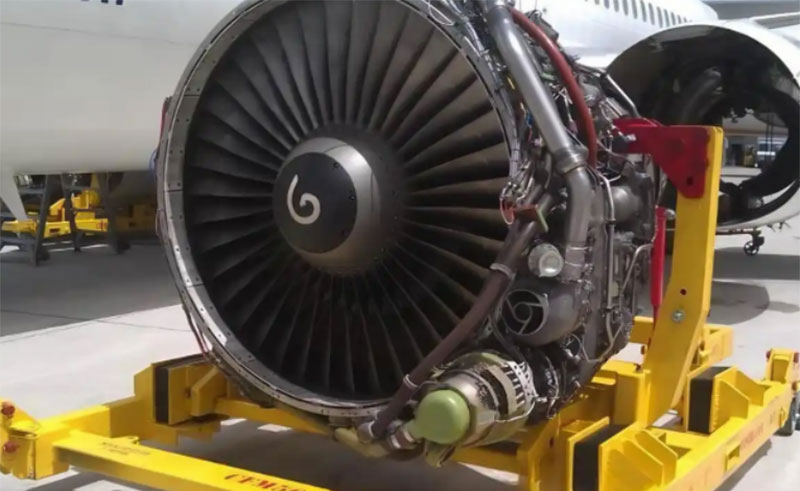
The reliability of aerospace engine Exhaust Gas Temperature (EGT) sensors and their associated wiring harness systems is critical to flight safety and engine performance. Traditional inspection methods—such as external visual checks and continuity measurements—have significant limitations. They often fail to identify hidden defects like internal connector corrosion or loose pins, which can cause EGT indication faults. This leads to extended troubleshooting cycles and higher maintenance costs.
Industrial Borescope technology provides a direct and precise visual solution for in-depth inspection of aerospace engine EGT systems. For example, the Coantec X5 series 3D measurement Borescope establishes a complete closed-loop process from discovery to assessment. It not only locates hidden defects within wiring harnesses but also enables quantitative analysis through 3D measurement, delivering reliable data for maintenance decisions. Standardized inspection reports ensure full process traceability. This application is helping shift maintenance paradigms from reactive troubleshooting to proactive prevention, significantly enhancing engine reliability and maintenance depth.
The Necessity of In-Depth Inspection: Hidden Risks in the EGT System
The engine EGT indication system is a sophisticated signal chain. Weak signals from thermocouples must be transmitted flawlessly to the control unit via wiring harnesses and connectors. However, the high-temperature, high-vibration, and potentially corrosive environment of long-term engine operation can lead to hidden failures, including:
Internal Degradation of Electrical Connections: Oxidation, sulfidation, fretting wear, or poor pin contact inside plugs and sockets.
Hidden Wiring Harness Damage: Internal wire fractures due to stress or microscopic insulation cracks from thermal aging.
Unverifiable Installation Conditions: Internal connector crimp quality or fastener torque cannot be assessed externally.
These "internal defects" are common root causes of intermittent EGT indication fluctuations and false over-temperature warnings. Using traditional methods, maintenance personnel can only speculate based on symptoms and perform trial-and-error replacements, making it difficult to accurately and efficiently eliminate the root cause.
Core Application: Industrial Borescopes Enable a Breakthrough from "Surface to Core" Inspection
The adoption of industrial Borescope technology represents a significant shift in EGT system inspection—from inferring condition externally to verifying it internally.
1. Application Points and Methods
Direct Visual Inspection of Connector Interiors: A small-diameter probe is inserted into the rear of a connector or a dedicated inspection port. This allows direct observation of pin condition, including metal finish, contamination, or arc erosion.
Wiring Harness Routing Assessment: The probe can be guided along compact harness paths within the engine compartment to check for issues like chafing, heat discoloration, or failed clamps.
Verification of Terminal Connections: Where accessible, key connection points such as sensor terminals can be visually confirmed.
2. Key Technical Support: From "Seeing" to "Precise Measurement"
3D measurement Borescopes, such as the Coantec X5 Pro series, elevate the application from qualitative observation to quantitative analysis. Upon detecting suspected corrosion or damage, 3D phase scanning measurement can be initiated immediately. This accurately captures quantitative data like defect length, area, and depth (with accuracy up to 0.01mm), providing an objective, scientific basis for assessing damage severity and defining maintenance standards.
Value Analysis: Enhancing Maintenance Efficiency and Safety Margins
Systematically applying industrial Borescopes for deep EGT inspection creates significant multi-dimensional value:
1. Precise Fault Localization, Improved Troubleshooting Efficiency
Endoscopic inspection can narrow down a fault from "a section of wiring harness" or "a component" to "a specific pin in a specific connector." In one case, an airline customer used the Coantec X5 Pro to investigate persistent intermittent EGT fluctuations. By systematically checking multiple connectors, they discovered minor green corrosion at the base of one pin. Cleaning the pin completely resolved the fault, avoiding unnecessary replacement of the entire harness.
2. Quantitative Assessment, Optimized Maintenance Decisions
Clear internal images and precise measurement data shift maintenance decisions from experience-based judgment to evidence-based analysis. Engineers can now differentiate between superficial oxidation (requiring no immediate action) and deep corrosion that compromises conductivity. This enables precise allocation of maintenance resources and cost optimization.
3. Process Traceability, Establishing a Condition Baseline
Each inspection with the Coantec X5 Pro generates a standardized electronic report containing high-definition images, measurement data, and annotations. These reports not only aid troubleshooting but also accumulate to form a visual health record of the engine's EGT system. Comparing historical data helps identify progressive component degradation, laying the groundwork for predictive maintenance.
4. Driving a Maintenance Paradigm Shift
The widespread adoption of industrial borescope technology is helping evolve maintenance practices from a passive "fail-and-fix" model to a proactive approach based on "condition monitoring" and "early detection and prevention." This fundamentally improves the overall safety margin and availability of the engine.
Conclusion
In the aerospace sector, where safety and reliability requirements are paramount, the ability to perform in-depth inspections of critical engine systems is essential. Industrial Borescope technology, particularly advanced models with integrated 3D measurement, has successfully addressed the traditional challenge of not knowing the internal condition of EGT sensor harnesses. By enabling maintenance personnel to "see inside" and "quantify defects," it serves not only as an efficient troubleshooting tool but also as a key technology driving aerospace maintenance toward greater precision, foresight, and reliability. Its application signifies a substantial advancement in the digitalization, visualization, and refinement of engine maintenance.
Copyright © 2025. Coantec Ltd. All rights reserved. sitemap