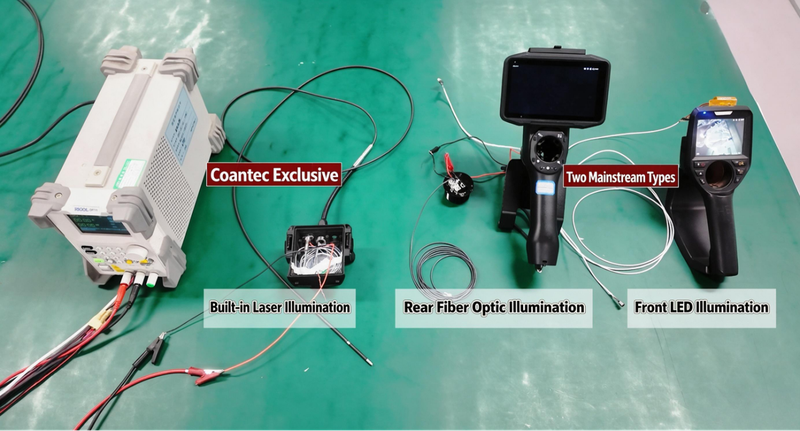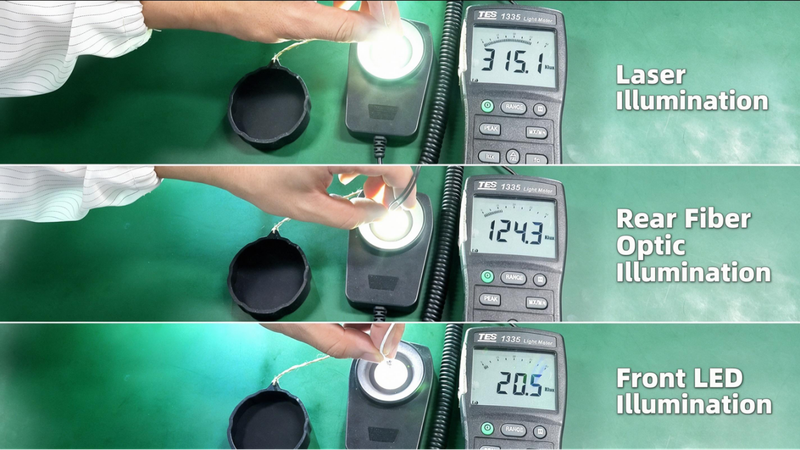

Những loại chiếu sáng nào được sử dụng trong kính nội soi công nghiệp? So sánh đèn LED, sợi quang và laser

2026-09-08

Trong các ngành công nghiệp như hàng không vũ trụ, tua bin khí, chế biến hóa dầu và sản xuất ô tô, nhiều bộ phận quan trọng được đặt bên trong những không gian hẹp, khép kín hoặc không thể tiếp cận được.

Borescope công nghiệp cho phép người kiểm tra tiếp cận các khu vực này thông qua ống chèn linh hoạt và hiển thị các điều kiện bên trong theo thời gian thực, khiến chúng trở thành công cụ kiểm tra trực quan cần thiết cho thử nghiệm không phá hủy (NDT).
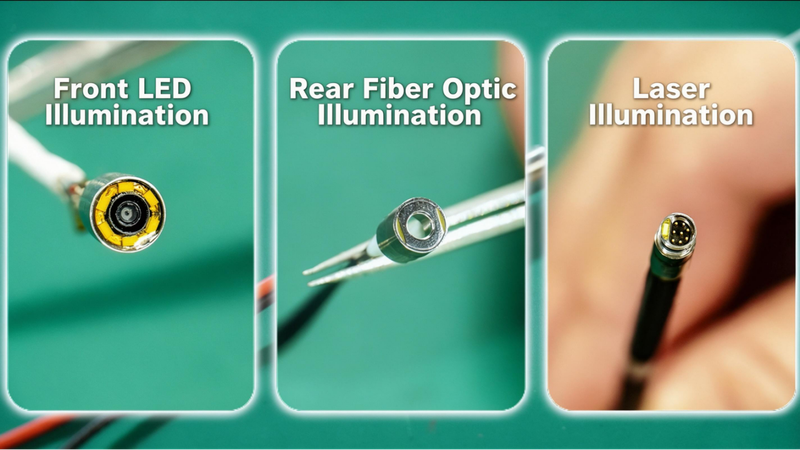
LED, Fiber-Optic and Laser Compared

Tuy nhiên, việc đạt được hình ảnh kiểm tra rõ ràng và đáng tin cậy không chỉ phụ thuộc vào máy ảnh và hệ thống quang học.

Trong hầu hết các môi trường kiểm tra công nghiệp, khu vực được kiểm tra có ít hoặc không có ánh sáng xung quanh và có thể tối hoàn toàn. Do đó, lượng thông tin hình ảnh hữu ích được hệ thống hình ảnh ghi lại phụ thuộc rất nhiều vào độ chiếu sáng có sẵn tại điểm kiểm tra.

Vì lý do này, độ chiếu sáng là một phần quan trọng của hệ thống chụp ảnh kính soi công nghiệp và là một trong những yếu tố chính ảnh hưởng đến hiệu suất kiểm tra trong thế giới thực.

Vậy những loại ánh sáng nào thường được sử dụng trong kính soi công nghiệp? Sự khác biệt giữa chiếu sáng LED, cáp quang và laser là gì? Và công nghệ nào phù hợp hơn với các ứng dụng kiểm tra khác nhau?

Tại sao Borescope công nghiệp cần chiếu sáng?

Để hiểu vai trò của sự chiếu sáng, trước hết cần hiểu cách một ống soi công nghiệp tạo thành hình ảnh.

Nói một cách đơn giản, nguồn sáng chiếu sáng bề mặt mục tiêu. Quang học của kính soi thu thập ánh sáng phản xạ và cảm biến hình ảnh chuyển đổi thông tin quang học đó thành tín hiệu điện tử, sau đó được xử lý và hiển thị dưới dạng hình ảnh.

Do đó, quá trình hình ảnh có thể được tóm tắt như sau:

Ánh sáng chiếu sáng mục tiêu → Ánh sáng phản xạ đi vào quang học → Cảm biến hình ảnh ghi lại thông tin → Xử lý hình ảnh → Hiển thị

Nếu không có đủ ánh sáng, ngay cả cảm biến hình ảnh có độ phân giải cao cũng có thể gặp khó khăn trong việc tạo ra hình ảnh rõ ràng và có thể sử dụng được.

Điều này đặc biệt quan trọng trong kiểm tra công nghiệp, nơi mà người kiểm tra thường cần xác định các đặc điểm và khuyết tật bề mặt rất nhỏ. Các vết nứt, ăn mòn, hư hỏng do cháy, xói mòn và trầy xước trên các bộ phận của tuabin hoặc động cơ có thể dễ dàng bị che khuất do không đủ ánh sáng, các khu vực bị bóng hoặc nhiễu hình ảnh.

Do đó, không nên đánh giá khả năng chụp ảnh của máy soi lỗ khoan công nghiệp chỉ bằng độ phân giải hoặc kích thước màn hình. Hiệu suất của hệ thống chiếu sáng, quang học, cảm biến hình ảnh và công nghệ xử lý hình ảnh cũng phải được coi là một hệ thống tích hợp.

Chiếu sáng LED: Công nghệ chiếu sáng phổ biến nhất trong kính nội soi công nghiệp

Đèn LED chiếu sáng hiện là giải pháp chiếu sáng được sử dụng rộng rãi nhất trong kính nội soi và kính hiển vi công nghiệp.

Đèn LED nhỏ gọn, tiết kiệm năng lượng, bền lâu và tương đối dễ điều khiển, khiến chúng đặc biệt phù hợp với các thiết bị có không gian bên trong cực kỳ hạn chế. Trong nhiều ống soi công nghiệp, đèn LED thu nhỏ được tích hợp gần camera ở đầu xa của ống chèn, cung cấp ánh sáng trực tiếp cho khu vực kiểm tra.

Đối với các ứng dụng như kiểm tra động cơ ô tô, kiểm tra linh kiện cơ khí, kiểm tra đường ống bên trong và bảo trì thiết bị định kỳ, khoảng cách kiểm tra thường tương đối ngắn. Trong những điều kiện này, hệ thống chiếu sáng bằng đèn LED có thể đáp ứng các yêu cầu của hầu hết các cuộc kiểm tra trực quan thông thường.

Những ưu điểm này đã khiến công nghệ LED trở thành giải pháp chiếu sáng vượt trội trên thị trường kính soi công nghiệp.

Tuy nhiên, đèn LED không hoạt động tốt như nhau trong mọi môi trường kiểm tra.

Khi không gian kiểm tra trở nên lớn hơn và khoảng cách xem tăng lên, ánh sáng sẽ lan truyền một cách tự nhiên trên một khu vực rộng hơn. Do đó, lượng ánh sáng hữu ích chiếu tới mục tiêu ở xa sẽ giảm đi. Người kiểm tra có thể cần phải định vị lại đầu dò nhiều lần và di chuyển đầu xa đến gần mục tiêu hơn để có đủ độ sáng và chi tiết của hình ảnh.

Đối với môi trường kiểm tra rộng và sâu, việc cải thiện khả năng chiếu sáng hiệu quả ở khoảng cách xa do đó trở thành một thách thức ngày càng quan trọng.

Chiếu sáng sợi quang: Cung cấp ánh sáng đến đầu xa

Không giống như đèn LED được gắn trực tiếp gần máy ảnh, hệ thống chiếu sáng bằng sợi quang sẽ tách nguồn sáng khỏi đầu xa của ống soi.

Nguồn chiếu sáng có thể được đặt trong bộ phận chính hoặc trong một nguồn sáng bên ngoài riêng biệt, trong khi các sợi quang truyền ánh sáng đến đầu xa của thiết bị.

Công nghệ này từ lâu đã được sử dụng trong các hệ thống kiểm tra nội soi công nghiệp chuyên nghiệp.

Do nguồn sáng không bị hạn chế bởi không gian cực kỳ hạn chế ở đầu đầu dò nên hệ thống có thể mang lại sự linh hoạt cao hơn trong việc lựa chọn nguồn chiếu sáng công suất cao hơn hoặc chuyên dụng hơn.

Do đó, đối với các ứng dụng kiểm tra chuyên nghiệp có yêu cầu chiếu sáng cao hơn, hệ thống cáp quang có thể mang lại sự linh hoạt cao hơn trong thiết kế hệ thống quang học tổng thể.

Tuy nhiên, chiếu sáng sợi quang cũng có thể làm tăng độ phức tạp của hệ thống. Nguồn sáng, bó sợi và hệ thống ống soi phải được kết nối và khớp đúng cách, trong khi hoạt động tại hiện trường có thể đòi hỏi các yêu cầu về thiết bị, kết nối và khớp nối quang bổ sung.

Từ góc độ kỹ thuật, chiếu sáng sợi quang nhấn mạnh sự tách biệt của nguồn sáng và đầu dò, cho phép linh hoạt hơn trong cấu hình nguồn sáng. Ngược lại, hệ thống chiếu sáng LED tập trung nhiều hơn vào sự tích hợp nhỏ gọn và tiện lợi.

Chiếu sáng bằng Laser: Tại sao nó thu hút sự chú ý trong kiểm tra công nghiệp?

So với đèn LED và chiếu sáng sợi quang thông thường, chiếu sáng bằng laser thể hiện một hướng kỹ thuật chuyên biệt hơn trong các ứng dụng kính soi công nghiệp.

Một trong những đặc điểm chính của ánh sáng laser là tính định hướng mạnh và nồng độ năng lượng cao.

In industries such as aerospace, gas turbines, petrochemical processing and automotive manufacturing, many critical components are located inside narrow, enclosed, or otherwise inaccessible spaces. Industrial borescopes enable inspectors to access these areas through a flexible insertion tube and display internal conditions in real time, making them an essential visual inspection tool for non-destructive testing (NDT). However, achieving clear and reliable inspection images depends on more than just the camera and optics. In most industrial inspection environments, the area being inspected has little or no ambient light and may be completely dark. The amount of useful image information captured by the imaging system therefore depends heavily on the illumination available at the inspection point. For this reason, illumination is a critical part of an industrial borescope imaging system and one of the key factors affecting real-world inspection performance. So, what types of illumination are commonly used in industrial borescopes? What are the differences between LED, fiber-optic and laser illumination? And which technologies are better suited to different inspection applications? Why Do Industrial Borescopes Need Illumination? To understand the role of illumination, it is helpful to first understand how an industrial borescope forms an image. In simple terms, the light source illuminates the target surface. The borescope optics collect the reflected light, and the image sensor converts that optical information into electronic signals, which are then processed and displayed as an image. The imaging process can therefore be summarized as: Light illuminates the target → Reflected light enters the optics → The image sensor captures the information → Image processing → Display Without sufficient illumination, even a high-resolution image sensor may struggle to produce a clear and usable image. This is particularly important in industrial inspection, where inspectors often need to identify very small surface features and defects. Cracks, corrosion, burn damage, erosion and scratches on turbine or engine components can easily be obscured by insufficient illumination, shadowed areas or image noise. Therefore, the imaging capability of an industrial borescope should not be evaluated solely by resolution or display size. The performance of the illumination system, optics, image sensor and image-processing technology must also be considered as an integrated system. LED Illumination: The Most Common Lighting Technology in Industrial Borescopes LED illumination is currently the most widely used lighting solution in industrial borescopes and videoscopes. LEDs are compact, energy-efficient, long-lasting and relatively easy to control, making them particularly suitable for equipment with extremely limited internal space. In many industrial borescopes, miniature LEDs are integrated close to the camera at the distal end of the insertion tube, providing direct illumination of the inspection area. For applications such as automotive engine inspection, mechanical component inspection, internal pipe inspection and routine equipment maintenance, inspection distances are typically relatively short. Under these conditions, LED illumination can meet the requirements of most routine visual inspections. These advantages have made LED technology the dominant illumination solution in the industrial borescope market. However, LEDs do not perform equally well in every inspection environment. As the inspection space becomes larger and the viewing distance increases, light naturally spreads over a wider area. The amount of useful illumination reaching a distant target is therefore reduced. Inspectors may need to reposition the probe repeatedly and move the distal end closer to the target in order to obtain sufficient image brightness and detail. For large and deep inspection environments, improving effective long-distance illumination therefore becomes an increasingly important challenge. Fiber-Optic Illumination: Delivering Light to the Distal End Unlike LEDs mounted directly near the camera, fiber-optic illumination separates the light source from the distal end of the borescope. The illumination source can be located in the main unit or in a separate external light source, while optical fibers transmit the light to the distal end of the instrument. This technology has long been used in professional industrial endoscopic inspection systems. Because the light source is not constrained by the extremely limited space available at the probe tip, the system can provide greater flexibility in selecting higher-output or more specialized illumination sources. For professional inspection applications with higher illumination requirements, fiber-optic systems can therefore offer greater flexibility in overall optical system design. However, fiber-optic illumination can also increase system complexity. The light source, fiber bundle and borescope system must be properly connected and matched, while field operation may involve additional equipment, connections and optical coupling requirements. From a technical perspective, fiber-optic illumination emphasizes the separation of the light source and the probe, allowing more flexibility in light-source configuration. LED illumination, by comparison, focuses more on compact integration and convenience. Laser Illumination: Why Is It Attracting Attention in Industrial Inspection? Compared with LED and conventional fiber-optic illumination, laser illumination represents a more specialized technical direction in industrial borescope applications. One of the key characteristics of laser light is its strong directionality and high energy concentration. This does not simply mean that a laser is “brighter than an LED.” More importantly, with appropriate optical design, laser energy can be directed and distributed more effectively toward the inspection target, creating new possibilities for illuminating objects at longer distances and in deep inspection environments. This can be particularly valuable when inspecting large and complex industrial equipment. For example, during the inspection of large aero engines, gas turbines and other complex equipment, the inspector may not always be observing a small target located close to the distal end of the borescope. Instead, the inspection target may include turbine blades, combustion chambers or other structures located within a large and deep internal space. If illumination is effective only at close range, the inspector may need to repeatedly reposition the insertion tube or divide a large inspection area into multiple sections. More effective long-distance illumination can make it possible to observe larger target areas from a more suitable working distance, creating additional flexibility for inspection in large and deep spaces. Therefore, the value of laser illumination is not simply about achieving higher brightness. Its real significance lies in improving illumination efficiency for specific long-distance and large-volume inspection environments where conventional lighting technologies may face limitations. Of course, laser illumination also requires careful optical system design. Industrial equipment often contains highly reflective metallic surfaces. Strong reflections can produce localized highlights or overexposure. For this reason, the laser illumination system must be properly matched with the optical design, image sensor and image-processing algorithms in order to deliver useful inspection performance. LED vs. Fiber-Optic vs. Laser Illumination: What Is the Difference? In practical applications, these three illumination technologies should not simply be classified as “advanced” or “outdated.” Instead, each represents a different technical approach designed for different inspection requirements.  Illumination Technology Key Characteristics Typical Applications  LED Illumination Compact, easy to integrate, mature technology Routine industrial inspection at short distances  Fiber-Optic Illumination Separates the light source from the probe and supports more flexible light-source configurations Professional inspections with higher illumination requirements  Laser Illumination Strong directionality and concentrated optical energy, offering potential advantages for long-distance illumination Large, deep and long-distance industrial inspection environments  Therefore, when selecting an industrial borescope, it is not accurate to assume that laser illumination is automatically better than LED illumination. For routine close-range inspection of mechanical components, LED illumination can provide stable and reliable performance. For specialized applications requiring greater illumination capability or longer observation distances, fiber-optic or laser-based solutions may offer additional advantages. The most suitable illumination technology depends on the inspection object, working distance, internal space and the specific characteristics of the defects being inspected. Why Are Modern Industrial Borescopes Moving Toward Multi-Source Illumination? As industrial inspection targets become increasingly complex, a single white-light source may not be sufficient for every application. Different materials and surface conditions reflect light differently. The same defect may also appear differently under different illumination conditions. As a result, some next-generation industrial borescopes are beginning to offer a wider range of specialized illumination options, including different wavelengths and illumination methods. The purpose of multi-source illumination is not simply to add more lights to the system. Its real value is to provide inspectors with more suitable observation conditions for different inspection objects and tasks. In other words, the key question is changing. In the past, the focus was often: “Is the light bright enough?” Today, the more important question is becoming: “What type of illumination can help the inspector identify the target features more effectively?” Industrial Borescope Illumination Is Evolving from “Lighting” to “Effective Imaging” The development of industrial borescope illumination reflects the changing requirements of industrial inspection. In the early stages, illumination primarily needed to solve one problem: Making the invisible visible. As high-definition imaging technology developed, the focus shifted toward: Seeing more clearly. Today, as industrial inspection increasingly involves large-scale equipment and intelligent visual inspection technologies, illumination systems must also address new requirements: Seeing farther. Seeing more. And working more effectively with imaging algorithms. As a result, the illumination system is no longer simply an independent light source module. It is becoming increasingly integrated into the overall imaging system. The light source determines how the target is illuminated. The optical system determines how reflected light is collected. The image sensor records the information, while image-processing algorithms influence how the final image is presented and analyzed. Only when these elements work together effectively can an industrial borescope deliver meaningful visual inspection performance. The Next Step for Laser Illumination: From Specialized Light Sources to Integrated Systems As laser illumination enters industrial borescope applications, one important development direction is miniaturization and system integration. Traditional professional laser illumination systems often rely on separate light-source modules. While this approach may be acceptable for large stationary inspection systems, it can reduce convenience and operational efficiency for handheld industrial borescopes designed for field inspection. The more equipment and connections required, the greater the impact on portability and ease of use. This raises an important technical question: Can the laser emission system be integrated directly into the handheld industrial borescope itself? This is not simply a matter of adding a laser to the device. Integrating a laser emission module into a handheld borescope requires careful consideration of power supply, thermal management, optical coupling, internal space and overall system reliability. For this reason, integrated laser illumination is fundamentally a test of a manufacturer's system-level engineering and integration capabilities. The Coantec BLX Series AI Industrial Borescope represents one approach to this development direction by integrating the laser emission module directly into the handheld main unit, combining laser illumination with the overall borescope system in a more compact design. Currently, Coantec BLX is the only integrated handheld industrial borescope solution in China that incorporates the laser emission module directly into the main unit. This development reflects a broader trend in which laser illumination is gradually evolving from a separate professional light-source technology toward more compact and portable industrial visual inspection systems. Conclusion: Clear Industrial Inspection Starts with the Right Light The primary purpose of an industrial borescope is to inspect areas that cannot be directly observed. However, the ability to achieve a clear inspection image depends on far more than the camera alone. From LED illumination to fiber-optic light transmission and laser illumination, different technologies have emerged in response to changing industrial inspection requirements. LED illumination meets the needs of most routine close-range inspections. Fiber-optic illumination provides greater flexibility for professional light-source configurations. Laser illumination, meanwhile, is opening new possibilities for long-distance, large-space and deep-cavity inspection. As aerospace engines, gas turbines and other high-end industrial equipment place increasingly demanding requirements on visual inspection, illumination will continue to evolve from a simple supplementary lighting function into a critical component of the overall imaging system. Future competition in industrial borescope technology will therefore extend beyond specifications such as resolution, display size and probe diameter. It will increasingly focus on the integration and coordination of: Illumination · Optics · Imaging · Algorithms · System Engineering The transition of laser illumination from specialized external light sources toward integrated handheld systems may become an important part of this evolution. A high-performance industrial borescope does more than help inspectors see inside. With the right illumination, it helps them see the details that truly matter.

Điều này không chỉ đơn giản có nghĩa là tia laser “sáng hơn đèn LED”.

Quan trọng hơn, với thiết kế quang học phù hợp, năng lượng laser có thể được định hướng và phân phối hiệu quả hơn tới mục tiêu kiểm tra, tạo ra những khả năng mới để chiếu sáng các vật thể ở khoảng cách xa hơn và trong môi trường kiểm tra sâu.

Điều này có thể đặc biệt có giá trị khi kiểm tra các thiết bị công nghiệp lớn và phức tạp.

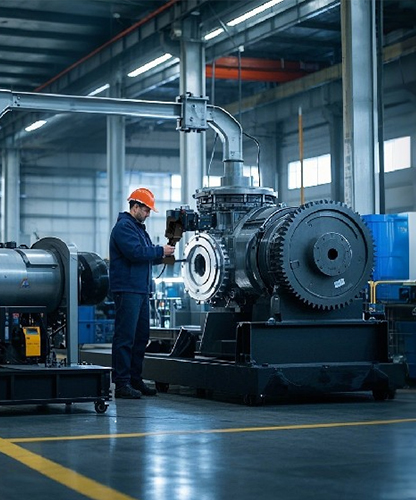
Ví dụ, trong quá trình kiểm tra động cơ máy bay lớn, tua-bin khí và các thiết bị phức tạp khác, người kiểm tra có thể không phải lúc nào cũng quan sát được một mục tiêu nhỏ nằm gần đầu xa của ống soi. Thay vào đó, mục tiêu kiểm tra có thể bao gồm các cánh tuabin, buồng đốt hoặc các kết cấu khác nằm trong một không gian bên trong rộng và sâu.

Nếu việc chiếu sáng chỉ có hiệu quả ở cự ly gần, người kiểm tra có thể cần phải định vị lại ống chèn nhiều lần hoặc chia khu vực kiểm tra lớn thành nhiều phần.

Chiếu sáng ở khoảng cách xa hiệu quả hơn có thể giúp quan sát các khu vực mục tiêu lớn hơn từ khoảng cách làm việc phù hợp hơn, tạo thêm tính linh hoạt cho việc kiểm tra trong không gian rộng và sâu.

Vì thế, giá trị của việc chiếu sáng bằng laser không chỉ đơn giản là đạt được độ sáng cao hơn. Ý nghĩa thực sự của nó nằm ở việc cải thiện hiệu quả chiếu sáng cho các môi trường kiểm tra khối lượng lớn và khoảng cách xa cụ thể, nơi các công nghệ chiếu sáng thông thường có thể gặp phải những hạn chế.

Tất nhiên, chiếu sáng bằng laser cũng đòi hỏi phải thiết kế hệ thống quang học cẩn thận.

Thiết bị công nghiệp thường có bề mặt kim loại có độ phản chiếu cao. Phản xạ mạnh có thể tạo ra những điểm nổi bật cục bộ hoặc phơi sáng quá mức. Vì lý do này, hệ thống chiếu sáng bằng laser phải được kết hợp phù hợp với thiết kế quang học, cảm biến hình ảnh và thuật toán xử lý hình ảnh để mang lại hiệu suất kiểm tra hữu ích.

Đèn LED so với sợi quang và chiếu sáng bằng laser: Sự khác biệt là gì?

Trong các ứng dụng thực tế, ba công nghệ chiếu sáng này không nên được phân loại đơn giản là “tiên tiến” hoặc “lỗi thời”.

Thay vào đó, mỗi phương pháp đại diện cho một phương pháp kỹ thuật khác nhau được thiết kế cho các yêu cầu kiểm tra khác nhau.

In industries such as aerospace, gas turbines, petrochemical processing and automotive manufacturing, many critical components are located inside narrow, enclosed, or otherwise inaccessible spaces. Industrial borescopes enable inspectors to access these areas through a flexible insertion tube and display internal conditions in real time, making them an essential visual inspection tool for non-destructive testing (NDT). However, achieving clear and reliable inspection images depends on more than just the camera and optics. In most industrial inspection environments, the area being inspected has little or no ambient light and may be completely dark. The amount of useful image information captured by the imaging system therefore depends heavily on the illumination available at the inspection point. For this reason, illumination is a critical part of an industrial borescope imaging system and one of the key factors affecting real-world inspection performance. So, what types of illumination are commonly used in industrial borescopes? What are the differences between LED, fiber-optic and laser illumination? And which technologies are better suited to different inspection applications? Why Do Industrial Borescopes Need Illumination? To understand the role of illumination, it is helpful to first understand how an industrial borescope forms an image. In simple terms, the light source illuminates the target surface. The borescope optics collect the reflected light, and the image sensor converts that optical information into electronic signals, which are then processed and displayed as an image. The imaging process can therefore be summarized as: Light illuminates the target → Reflected light enters the optics → The image sensor captures the information → Image processing → Display Without sufficient illumination, even a high-resolution image sensor may struggle to produce a clear and usable image. This is particularly important in industrial inspection, where inspectors often need to identify very small surface features and defects. Cracks, corrosion, burn damage, erosion and scratches on turbine or engine components can easily be obscured by insufficient illumination, shadowed areas or image noise. Therefore, the imaging capability of an industrial borescope should not be evaluated solely by resolution or display size. The performance of the illumination system, optics, image sensor and image-processing technology must also be considered as an integrated system. LED Illumination: The Most Common Lighting Technology in Industrial Borescopes LED illumination is currently the most widely used lighting solution in industrial borescopes and videoscopes. LEDs are compact, energy-efficient, long-lasting and relatively easy to control, making them particularly suitable for equipment with extremely limited internal space. In many industrial borescopes, miniature LEDs are integrated close to the camera at the distal end of the insertion tube, providing direct illumination of the inspection area. For applications such as automotive engine inspection, mechanical component inspection, internal pipe inspection and routine equipment maintenance, inspection distances are typically relatively short. Under these conditions, LED illumination can meet the requirements of most routine visual inspections. These advantages have made LED technology the dominant illumination solution in the industrial borescope market. However, LEDs do not perform equally well in every inspection environment. As the inspection space becomes larger and the viewing distance increases, light naturally spreads over a wider area. The amount of useful illumination reaching a distant target is therefore reduced. Inspectors may need to reposition the probe repeatedly and move the distal end closer to the target in order to obtain sufficient image brightness and detail. For large and deep inspection environments, improving effective long-distance illumination therefore becomes an increasingly important challenge. Fiber-Optic Illumination: Delivering Light to the Distal End Unlike LEDs mounted directly near the camera, fiber-optic illumination separates the light source from the distal end of the borescope. The illumination source can be located in the main unit or in a separate external light source, while optical fibers transmit the light to the distal end of the instrument. This technology has long been used in professional industrial endoscopic inspection systems. Because the light source is not constrained by the extremely limited space available at the probe tip, the system can provide greater flexibility in selecting higher-output or more specialized illumination sources. For professional inspection applications with higher illumination requirements, fiber-optic systems can therefore offer greater flexibility in overall optical system design. However, fiber-optic illumination can also increase system complexity. The light source, fiber bundle and borescope system must be properly connected and matched, while field operation may involve additional equipment, connections and optical coupling requirements. From a technical perspective, fiber-optic illumination emphasizes the separation of the light source and the probe, allowing more flexibility in light-source configuration. LED illumination, by comparison, focuses more on compact integration and convenience. Laser Illumination: Why Is It Attracting Attention in Industrial Inspection? Compared with LED and conventional fiber-optic illumination, laser illumination represents a more specialized technical direction in industrial borescope applications. One of the key characteristics of laser light is its strong directionality and high energy concentration. This does not simply mean that a laser is “brighter than an LED.” More importantly, with appropriate optical design, laser energy can be directed and distributed more effectively toward the inspection target, creating new possibilities for illuminating objects at longer distances and in deep inspection environments. This can be particularly valuable when inspecting large and complex industrial equipment. For example, during the inspection of large aero engines, gas turbines and other complex equipment, the inspector may not always be observing a small target located close to the distal end of the borescope. Instead, the inspection target may include turbine blades, combustion chambers or other structures located within a large and deep internal space. If illumination is effective only at close range, the inspector may need to repeatedly reposition the insertion tube or divide a large inspection area into multiple sections. More effective long-distance illumination can make it possible to observe larger target areas from a more suitable working distance, creating additional flexibility for inspection in large and deep spaces. Therefore, the value of laser illumination is not simply about achieving higher brightness. Its real significance lies in improving illumination efficiency for specific long-distance and large-volume inspection environments where conventional lighting technologies may face limitations. Of course, laser illumination also requires careful optical system design. Industrial equipment often contains highly reflective metallic surfaces. Strong reflections can produce localized highlights or overexposure. For this reason, the laser illumination system must be properly matched with the optical design, image sensor and image-processing algorithms in order to deliver useful inspection performance. LED vs. Fiber-Optic vs. Laser Illumination: What Is the Difference? In practical applications, these three illumination technologies should not simply be classified as “advanced” or “outdated.” Instead, each represents a different technical approach designed for different inspection requirements.  Illumination Technology Key Characteristics Typical Applications  LED Illumination Compact, easy to integrate, mature technology Routine industrial inspection at short distances  Fiber-Optic Illumination Separates the light source from the probe and supports more flexible light-source configurations Professional inspections with higher illumination requirements  Laser Illumination Strong directionality and concentrated optical energy, offering potential advantages for long-distance illumination Large, deep and long-distance industrial inspection environments  Therefore, when selecting an industrial borescope, it is not accurate to assume that laser illumination is automatically better than LED illumination. For routine close-range inspection of mechanical components, LED illumination can provide stable and reliable performance. For specialized applications requiring greater illumination capability or longer observation distances, fiber-optic or laser-based solutions may offer additional advantages. The most suitable illumination technology depends on the inspection object, working distance, internal space and the specific characteristics of the defects being inspected. Why Are Modern Industrial Borescopes Moving Toward Multi-Source Illumination? As industrial inspection targets become increasingly complex, a single white-light source may not be sufficient for every application. Different materials and surface conditions reflect light differently. The same defect may also appear differently under different illumination conditions. As a result, some next-generation industrial borescopes are beginning to offer a wider range of specialized illumination options, including different wavelengths and illumination methods. The purpose of multi-source illumination is not simply to add more lights to the system. Its real value is to provide inspectors with more suitable observation conditions for different inspection objects and tasks. In other words, the key question is changing. In the past, the focus was often: “Is the light bright enough?” Today, the more important question is becoming: “What type of illumination can help the inspector identify the target features more effectively?” Industrial Borescope Illumination Is Evolving from “Lighting” to “Effective Imaging” The development of industrial borescope illumination reflects the changing requirements of industrial inspection. In the early stages, illumination primarily needed to solve one problem: Making the invisible visible. As high-definition imaging technology developed, the focus shifted toward: Seeing more clearly. Today, as industrial inspection increasingly involves large-scale equipment and intelligent visual inspection technologies, illumination systems must also address new requirements: Seeing farther. Seeing more. And working more effectively with imaging algorithms. As a result, the illumination system is no longer simply an independent light source module. It is becoming increasingly integrated into the overall imaging system. The light source determines how the target is illuminated. The optical system determines how reflected light is collected. The image sensor records the information, while image-processing algorithms influence how the final image is presented and analyzed. Only when these elements work together effectively can an industrial borescope deliver meaningful visual inspection performance. The Next Step for Laser Illumination: From Specialized Light Sources to Integrated Systems As laser illumination enters industrial borescope applications, one important development direction is miniaturization and system integration. Traditional professional laser illumination systems often rely on separate light-source modules. While this approach may be acceptable for large stationary inspection systems, it can reduce convenience and operational efficiency for handheld industrial borescopes designed for field inspection. The more equipment and connections required, the greater the impact on portability and ease of use. This raises an important technical question: Can the laser emission system be integrated directly into the handheld industrial borescope itself? This is not simply a matter of adding a laser to the device. Integrating a laser emission module into a handheld borescope requires careful consideration of power supply, thermal management, optical coupling, internal space and overall system reliability. For this reason, integrated laser illumination is fundamentally a test of a manufacturer's system-level engineering and integration capabilities. The Coantec BLX Series AI Industrial Borescope represents one approach to this development direction by integrating the laser emission module directly into the handheld main unit, combining laser illumination with the overall borescope system in a more compact design. Currently, Coantec BLX is the only integrated handheld industrial borescope solution in China that incorporates the laser emission module directly into the main unit. This development reflects a broader trend in which laser illumination is gradually evolving from a separate professional light-source technology toward more compact and portable industrial visual inspection systems. Conclusion: Clear Industrial Inspection Starts with the Right Light The primary purpose of an industrial borescope is to inspect areas that cannot be directly observed. However, the ability to achieve a clear inspection image depends on far more than the camera alone. From LED illumination to fiber-optic light transmission and laser illumination, different technologies have emerged in response to changing industrial inspection requirements. LED illumination meets the needs of most routine close-range inspections. Fiber-optic illumination provides greater flexibility for professional light-source configurations. Laser illumination, meanwhile, is opening new possibilities for long-distance, large-space and deep-cavity inspection. As aerospace engines, gas turbines and other high-end industrial equipment place increasingly demanding requirements on visual inspection, illumination will continue to evolve from a simple supplementary lighting function into a critical component of the overall imaging system. Future competition in industrial borescope technology will therefore extend beyond specifications such as resolution, display size and probe diameter. It will increasingly focus on the integration and coordination of: Illumination · Optics · Imaging · Algorithms · System Engineering The transition of laser illumination from specialized external light sources toward integrated handheld systems may become an important part of this evolution. A high-performance industrial borescope does more than help inspectors see inside. With the right illumination, it helps them see the details that truly matter.


Công nghệ chiếu sáng

Đặc điểm chính

Ứng dụng điển hình

Đèn LED chiếu sáng

Nhỏ gọn, dễ tích hợp, công nghệ hoàn thiện

Kiểm tra công nghiệp định kỳ ở khoảng cách ngắn

Chiếu sáng sợi quang

Tách nguồn sáng khỏi đầu dò và hỗ trợ cấu hình nguồn sáng linh hoạt hơn

Kiểm tra chuyên nghiệp với yêu cầu chiếu sáng cao hơn

Chiếu sáng bằng laze

Tính định hướng mạnh mẽ và năng lượng quang học tập trung, mang lại lợi thế tiềm năng cho việc chiếu sáng ở khoảng cách xa

Môi trường kiểm tra công nghiệp lớn, sâu và đường dài

Do đó, khi lựa chọn máy soi lỗ khoan công nghiệp, sẽ không chính xác khi cho rằng chiếu sáng bằng laser tự động tốt hơn chiếu sáng bằng đèn LED.

Để kiểm tra định kỳ ở phạm vi gần các bộ phận cơ khí, hệ thống chiếu sáng bằng đèn LED có thể mang lại hiệu suất ổn định và đáng tin cậy. Đối với các ứng dụng chuyên biệt yêu cầu khả năng chiếu sáng lớn hơn hoặc khoảng cách quan sát dài hơn, các giải pháp dựa trên sợi quang hoặc laser có thể mang lại những lợi thế bổ sung.

Công nghệ chiếu sáng phù hợp nhất phụ thuộc vào đối tượng kiểm tra, khoảng cách làm việc, không gian bên trong và đặc điểm cụ thể của khuyết tật được kiểm tra.

Tại sao kính nội soi công nghiệp hiện đại lại hướng tới chiếu sáng đa nguồn?

Khi các mục tiêu kiểm tra công nghiệp ngày càng trở nên phức tạp, một nguồn ánh sáng trắng duy nhất có thể không đủ cho mọi ứng dụng.

Vật liệu và điều kiện bề mặt khác nhau phản chiếu ánh sáng khác nhau. Khiếm khuyết tương tự cũng có thể xuất hiện khác nhau trong các điều kiện chiếu sáng khác nhau.

Do đó, một số kính soi công nghiệp thế hệ tiếp theo đang bắt đầu cung cấp nhiều tùy chọn chiếu sáng chuyên dụng hơn, bao gồm các bước sóng và phương pháp chiếu sáng khác nhau.

Mục đích của chiếu sáng đa nguồn không chỉ đơn giản là bổ sung thêm đèn cho hệ thống.

Giá trị thực sự của nó là cung cấp cho thanh tra viên những điều kiện quan sát phù hợp hơn với các đối tượng và nhiệm vụ thanh tra khác nhau.

Nói cách khác, câu hỏi quan trọng đang thay đổi.

Trước đây, trọng tâm thường là:

“Đèn có đủ sáng không?”

Ngày nay, câu hỏi quan trọng hơn đang trở thành:

“Loại chiếu sáng nào có thể giúp thanh tra xác định các đặc điểm mục tiêu hiệu quả hơn?”

Chiếu sáng lỗ khoan công nghiệp đang phát triển từ “chiếu sáng” đến “hình ảnh hiệu quả”

Sự phát triển của hệ thống chiếu sáng bằng kính soi công nghiệp phản ánh các yêu cầu thay đổi của kiểm tra công nghiệp.

Trong giai đoạn đầu, chiếu sáng chủ yếu cần thiết để giải quyết một vấn đề:

Làm cho cái vô hình trở nên hữu hình.

Khi công nghệ hình ảnh độ nét cao phát triển, trọng tâm chuyển sang:

Nhìn rõ hơn.

Ngày nay, khi việc kiểm tra công nghiệp ngày càng liên quan đến thiết bị quy mô lớn và công nghệ kiểm tra trực quan thông minh, hệ thống chiếu sáng cũng phải đáp ứng các yêu cầu mới:

Nhìn xa hơn. Nhìn thấy nhiều hơn. Và làm việc hiệu quả hơn với các thuật toán hình ảnh.

Kết quả là hệ thống chiếu sáng không còn đơn giản là một mô-đun nguồn sáng độc lập nữa. Nó ngày càng được tích hợp vào hệ thống hình ảnh tổng thể.

Nguồn sáng xác định mục tiêu được chiếu sáng như thế nào. Hệ thống quang học xác định cách thu thập ánh sáng phản xạ. Cảm biến hình ảnh ghi lại thông tin, trong khi các thuật toán xử lý hình ảnh ảnh hưởng đến cách trình bày và phân tích hình ảnh cuối cùng.

Chỉ khi các yếu tố này phối hợp với nhau một cách hiệu quả thì kính soi lỗ khoan công nghiệp mới mang lại hiệu quả kiểm tra trực quan có ý nghĩa.

Bước tiếp theo cho chiếu sáng bằng laser: Từ các nguồn sáng chuyên dụng đến các hệ thống tích hợp

Khi chiếu sáng laser đi vào các ứng dụng kính soi công nghiệp, một hướng phát triển quan trọng là thu nhỏ và tích hợp hệ thống.

Các hệ thống chiếu sáng laser chuyên nghiệp truyền thống thường dựa vào các mô-đun nguồn sáng riêng biệt. Mặc dù phương pháp này có thể được chấp nhận đối với các hệ thống kiểm tra cố định lớn nhưng nó có thể làm giảm sự thuận tiện và hiệu quả hoạt động của các máy soi công nghiệp cầm tay được thiết kế để kiểm tra hiện trường.

Càng cần nhiều thiết bị và kết nối thì tác động đến tính di động và dễ sử dụng càng lớn.

Điều này đặt ra một câu hỏi kỹ thuật quan trọng:

Hệ thống phát xạ laser có thể được tích hợp trực tiếp vào chính thiết bị soi lỗ công nghiệp cầm tay không?

Đây không chỉ đơn giản là vấn đề thêm tia laser vào thiết bị.

Việc tích hợp mô-đun phát xạ laze vào thiết bị soi lỗ khoan cầm tay đòi hỏi phải xem xét cẩn thận về nguồn điện, quản lý nhiệt, khớp nối quang, không gian bên trong và độ tin cậy tổng thể của hệ thống.

Vì lý do này, chiếu sáng laser tích hợp về cơ bản là một thử nghiệm về khả năng tích hợp và kỹ thuật cấp hệ thống của nhà sản xuất.

Borescope công nghiệp AI dòng Coantec BLX thể hiện một cách tiếp cận theo hướng phát triển này bằng cách tích hợp mô-đun phát tia laser trực tiếp vào thiết bị chính cầm tay, kết hợp chiếu sáng bằng laser với hệ thống ống soi tổng thể trong một thiết kế nhỏ gọn hơn.

Hiện tại, Coantec BLX là giải pháp kính soi công nghiệp cầm tay tích hợp duy nhất ở Trung Quốc kết hợp mô-đun phát tia laser trực tiếp vào thiết bị chính.

Sự phát triển này phản ánh một xu hướng rộng hơn, trong đó chiếu sáng bằng laser đang dần phát triển từ một công nghệ nguồn sáng chuyên nghiệp riêng biệt sang các hệ thống kiểm tra trực quan công nghiệp nhỏ gọn và di động hơn.

Kết luận: Kiểm tra công nghiệp rõ ràng bắt đầu bằng ánh sáng phù hợp

Mục đích chính của máy soi lỗ khoan công nghiệp là kiểm tra các khu vực không thể quan sát trực tiếp. Tuy nhiên, khả năng đạt được hình ảnh kiểm tra rõ ràng không chỉ phụ thuộc vào máy ảnh.

Từ đèn LED chiếu sáng đến truyền ánh sáng sợi quang và chiếu sáng laser, các công nghệ khác nhau đã xuất hiện để đáp ứng các yêu cầu kiểm tra công nghiệp đang thay đổi.

Đèn LED chiếu sáng đáp ứng nhu cầu của hầu hết các cuộc kiểm tra tầm gần thường lệ. Chiếu sáng bằng sợi quang mang lại sự linh hoạt cao hơn cho các cấu hình nguồn sáng chuyên nghiệp. Trong khi đó, chiếu sáng bằng laser đang mở ra những khả năng mới cho việc kiểm tra khoảng cách xa, không gian rộng và khoang sâu.

Khi động cơ hàng không vũ trụ, tua bin khí và các thiết bị công nghiệp cao cấp khác đặt ra yêu cầu ngày càng khắt khe về kiểm tra trực quan, hệ thống chiếu sáng sẽ tiếp tục phát triển từ chức năng chiếu sáng bổ sung đơn giản thành một thành phần quan trọng của hệ thống hình ảnh tổng thể.

Do đó, sự cạnh tranh trong tương lai về công nghệ kính soi công nghiệp sẽ vượt ra ngoài các thông số kỹ thuật như độ phân giải, kích thước màn hình và đường kính đầu dò.

Nó sẽ ngày càng tập trung vào sự tích hợp và phối hợp của:

Chiếu sáng · Quang học · Hình ảnh · Thuật toán · Kỹ thuật hệ thống

Sự chuyển đổi chiếu sáng bằng laser từ các nguồn sáng chuyên dụng bên ngoài sang các hệ thống cầm tay tích hợp có thể trở thành một phần quan trọng của quá trình phát triển này.

Máy soi lỗ khoan công nghiệp hiệu suất cao không chỉ giúp người kiểm tra nhìn thấy bên trong. Với ánh sáng phù hợp, nó giúp họ nhìn thấy những chi tiết thực sự quan trọng.
flora@chinavideoscope.com

+86-755-89728626

+86 13714520051