
Endüstriyel Boroskoplarda Ne Tür Aydınlatmalar Kullanılır? LED, Fiber Optik ve Lazer Karşılaştırıldı

2026-09-08

Havacılık, gaz türbinleri, petrokimya işleme ve otomotiv üretimi gibi endüstrilerde birçok kritik bileşen dar, kapalı veya başka şekilde erişilemeyen alanlarda bulunmaktadır.

Endüstriyel boroskoplar, müfettişlerin bu alanlara esnek bir yerleştirme tüpü aracılığıyla erişmesine ve iç koşulları gerçek zamanlı olarak görüntülemesine olanak tanır; bu da onları tahribatsız muayene (NDT) için önemli bir görsel muayene aracı haline getirir.
LED, Fiber-Optic and Laser Compared

Ancak net ve güvenilir inceleme görüntüleri elde etmek yalnızca kamera ve optiklerden daha fazlasına bağlıdır.

Endüstriyel denetim ortamlarının çoğunda, denetlenen alan çok az ortam ışığına sahiptir veya hiç yoktur ve tamamen karanlık olabilir. Bu nedenle, görüntüleme sistemi tarafından yakalanan yararlı görüntü bilgisinin miktarı, büyük ölçüde denetim noktasında mevcut olan aydınlatmaya bağlıdır.

Bu nedenle aydınlatma, endüstriyel boroskop görüntüleme sisteminin kritik bir parçasıdır ve gerçek dünyadaki denetim performansını etkileyen temel faktörlerden biridir.

Peki endüstriyel boroskoplarda yaygın olarak hangi tür aydınlatmalar kullanılıyor? LED, fiber optik ve lazer aydınlatma arasındaki farklar nelerdir? Peki hangi teknolojiler farklı denetim uygulamalarına daha uygundur?

Endüstriyel Boroskoplar Neden Aydınlatmaya İhtiyaç Duyar?

Aydınlatmanın rolünü anlamak için öncelikle endüstriyel bir boroskopun nasıl bir görüntü oluşturduğunu anlamak faydalı olacaktır.

Basit bir ifadeyle ışık kaynağı hedef yüzeyi aydınlatır. Boroskop optiği yansıyan ışığı toplar ve görüntü sensörü bu optik bilgiyi elektronik sinyallere dönüştürür ve bunlar daha sonra işlenir ve görüntü olarak görüntülenir.

Bu nedenle görüntüleme süreci şu şekilde özetlenebilir:

Işık hedefi aydınlatır → Yansıyan ışık optiğe girer → Görüntü sensörü bilgiyi yakalar → Görüntü işleme → Ekran

Yeterli aydınlatma olmadığında, yüksek çözünürlüklü bir görüntü sensörü bile net ve kullanışlı bir görüntü üretmekte zorlanabilir.

Bu, denetçilerin genellikle çok küçük yüzey özelliklerini ve kusurlarını tanımlamaya ihtiyaç duyduğu endüstriyel denetimde özellikle önemlidir. Türbin veya motor bileşenlerindeki çatlaklar, korozyon, yanık hasarları, erozyon ve çizikler, yetersiz aydınlatma, gölgeli alanlar veya görüntü paraziti nedeniyle kolayca gizlenebilir.

Bu nedenle endüstriyel boroskopun görüntüleme kapasitesi yalnızca çözünürlük veya ekran boyutuna göre değerlendirilmemelidir. Aydınlatma sistemi, optik, görüntü sensörü ve görüntü işleme teknolojisinin performansı da entegre bir sistem olarak değerlendirilmelidir.

LED Aydınlatma: Endüstriyel Boroskoplarda En Yaygın Aydınlatma Teknolojisi

LED aydınlatma şu anda endüstriyel boroskop ve videoskoplarda en yaygın kullanılan aydınlatma çözümüdür.

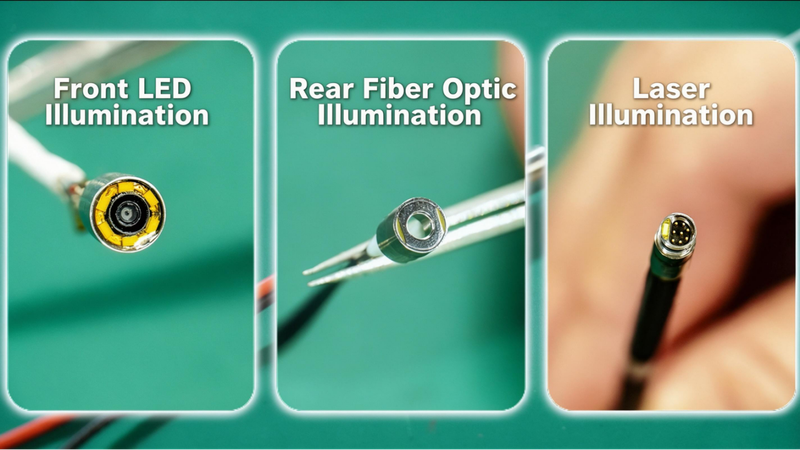
LED'ler kompakttır, enerji açısından verimlidir, uzun ömürlüdür ve kontrol edilmesi nispeten kolaydır; bu da onları özellikle son derece sınırlı dahili alana sahip ekipmanlar için uygun kılar. Birçok endüstriyel boroskopta, yerleştirme tüpünün uzak ucuna kameranın yakınına minyatür LED'ler entegre edilerek inceleme alanının doğrudan aydınlatılması sağlanır.

Otomotiv motor muayenesi, mekanik bileşen muayenesi, dahili boru muayenesi ve rutin ekipman bakımı gibi uygulamalar için muayene mesafeleri genellikle nispeten kısadır. Bu koşullar altında LED aydınlatma çoğu rutin görsel denetimin gereksinimlerini karşılayabilir.

Bu avantajlar, LED teknolojisini endüstriyel boroskop pazarında baskın aydınlatma çözümü haline getirmiştir.

Ancak LED'ler her denetim ortamında eşit derecede iyi performans göstermez.

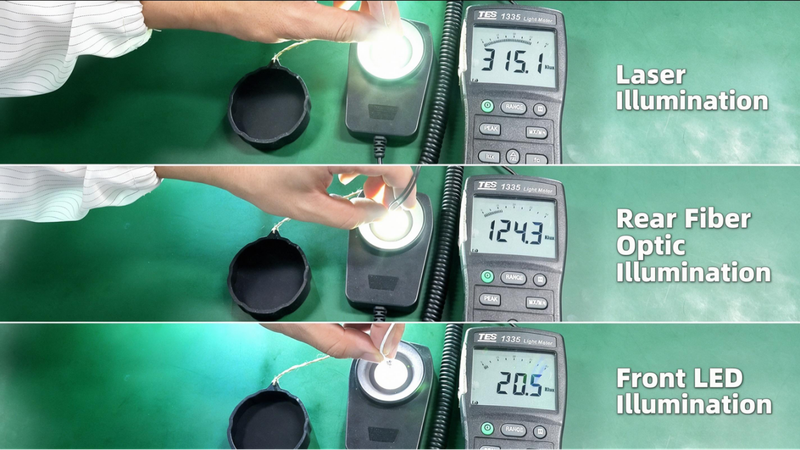
İnceleme alanı büyüdükçe ve görüş mesafesi arttıkça ışık doğal olarak daha geniş bir alana yayılır. Uzak bir hedefe ulaşan faydalı aydınlatma miktarı bu nedenle azalır. Yeterli görüntü parlaklığı ve detayı elde etmek için denetçilerin probu tekrar tekrar konumlandırması ve uzak ucu hedefe yaklaştırması gerekebilir.

Büyük ve derin denetim ortamları için etkili uzun mesafe aydınlatmanın iyileştirilmesi bu nedenle giderek daha önemli bir zorluk haline geliyor.

Fiber Optik Aydınlatma: Uzak Uca Işığı İletmek

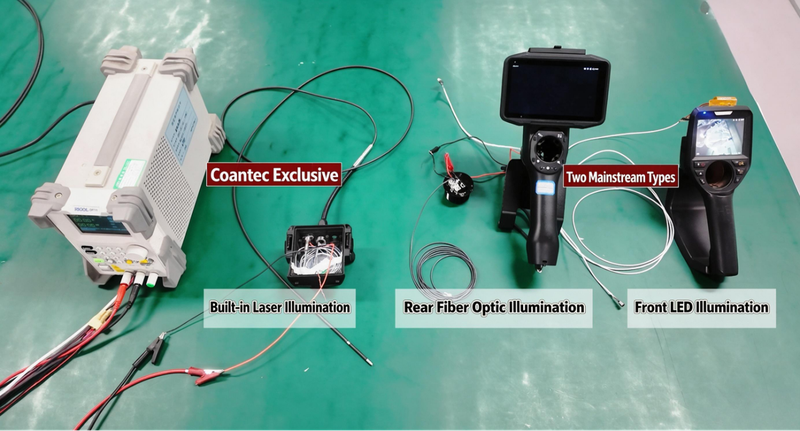
Doğrudan kameranın yakınına monte edilen LED'lerin aksine, fiber optik aydınlatma, ışık kaynağını boroskopun uzak ucundan ayırır.

Aydınlatma kaynağı ana ünitede veya ayrı bir harici ışık kaynağında bulunabilirken, optik fiberler ışığı cihazın uzak ucuna iletir.

Bu teknoloji uzun süredir profesyonel endüstriyel endoskopik muayene sistemlerinde kullanılmaktadır.

Işık kaynağı, prob ucundaki son derece sınırlı alanla sınırlandırılmadığından, sistem, daha yüksek çıkışlı veya daha özel aydınlatma kaynaklarının seçiminde daha fazla esneklik sağlayabilir.

Daha yüksek aydınlatma gereksinimleri olan profesyonel denetim uygulamaları için fiber optik sistemler bu nedenle genel optik sistem tasarımında daha fazla esneklik sunabilir.

Ancak fiber optik aydınlatma aynı zamanda sistemin karmaşıklığını da artırabilir. Işık kaynağı, fiber demeti ve boroskop sistemi uygun şekilde bağlanmalı ve eşleştirilmelidir; saha çalışması ise ek ekipman, bağlantılar ve optik bağlantı gereksinimleri gerektirebilir.

Teknik açıdan bakıldığında, fiber optik aydınlatma, ışık kaynağı ile probun ayrılmasını vurgularışık kaynağı konfigürasyonunda daha fazla esneklik sağlar. LED aydınlatma, kıyaslandığında daha çok kompakt entegrasyona ve rahatlığa odaklanır.

Lazer Aydınlatma: Endüstriyel Muayenede Neden Dikkat Çekiyor?

LED ve geleneksel fiber optik aydınlatmayla karşılaştırıldığında lazer aydınlatma, endüstriyel boroskop uygulamalarında daha uzmanlaşmış bir teknik yönü temsil eder.

Lazer ışığının temel özelliklerinden biri güçlü yönlülüğü ve yüksek enerji konsantrasyonudur.

In industries such as aerospace, gas turbines, petrochemical processing and automotive manufacturing, many critical components are located inside narrow, enclosed, or otherwise inaccessible spaces. Industrial borescopes enable inspectors to access these areas through a flexible insertion tube and display internal conditions in real time, making them an essential visual inspection tool for non-destructive testing (NDT). However, achieving clear and reliable inspection images depends on more than just the camera and optics. In most industrial inspection environments, the area being inspected has little or no ambient light and may be completely dark. The amount of useful image information captured by the imaging system therefore depends heavily on the illumination available at the inspection point. For this reason, illumination is a critical part of an industrial borescope imaging system and one of the key factors affecting real-world inspection performance. So, what types of illumination are commonly used in industrial borescopes? What are the differences between LED, fiber-optic and laser illumination? And which technologies are better suited to different inspection applications? Why Do Industrial Borescopes Need Illumination? To understand the role of illumination, it is helpful to first understand how an industrial borescope forms an image. In simple terms, the light source illuminates the target surface. The borescope optics collect the reflected light, and the image sensor converts that optical information into electronic signals, which are then processed and displayed as an image. The imaging process can therefore be summarized as: Light illuminates the target → Reflected light enters the optics → The image sensor captures the information → Image processing → Display Without sufficient illumination, even a high-resolution image sensor may struggle to produce a clear and usable image. This is particularly important in industrial inspection, where inspectors often need to identify very small surface features and defects. Cracks, corrosion, burn damage, erosion and scratches on turbine or engine components can easily be obscured by insufficient illumination, shadowed areas or image noise. Therefore, the imaging capability of an industrial borescope should not be evaluated solely by resolution or display size. The performance of the illumination system, optics, image sensor and image-processing technology must also be considered as an integrated system. LED Illumination: The Most Common Lighting Technology in Industrial Borescopes LED illumination is currently the most widely used lighting solution in industrial borescopes and videoscopes. LEDs are compact, energy-efficient, long-lasting and relatively easy to control, making them particularly suitable for equipment with extremely limited internal space. In many industrial borescopes, miniature LEDs are integrated close to the camera at the distal end of the insertion tube, providing direct illumination of the inspection area. For applications such as automotive engine inspection, mechanical component inspection, internal pipe inspection and routine equipment maintenance, inspection distances are typically relatively short. Under these conditions, LED illumination can meet the requirements of most routine visual inspections. These advantages have made LED technology the dominant illumination solution in the industrial borescope market. However, LEDs do not perform equally well in every inspection environment. As the inspection space becomes larger and the viewing distance increases, light naturally spreads over a wider area. The amount of useful illumination reaching a distant target is therefore reduced. Inspectors may need to reposition the probe repeatedly and move the distal end closer to the target in order to obtain sufficient image brightness and detail. For large and deep inspection environments, improving effective long-distance illumination therefore becomes an increasingly important challenge. Fiber-Optic Illumination: Delivering Light to the Distal End Unlike LEDs mounted directly near the camera, fiber-optic illumination separates the light source from the distal end of the borescope. The illumination source can be located in the main unit or in a separate external light source, while optical fibers transmit the light to the distal end of the instrument. This technology has long been used in professional industrial endoscopic inspection systems. Because the light source is not constrained by the extremely limited space available at the probe tip, the system can provide greater flexibility in selecting higher-output or more specialized illumination sources. For professional inspection applications with higher illumination requirements, fiber-optic systems can therefore offer greater flexibility in overall optical system design. However, fiber-optic illumination can also increase system complexity. The light source, fiber bundle and borescope system must be properly connected and matched, while field operation may involve additional equipment, connections and optical coupling requirements. From a technical perspective, fiber-optic illumination emphasizes the separation of the light source and the probe, allowing more flexibility in light-source configuration. LED illumination, by comparison, focuses more on compact integration and convenience. Laser Illumination: Why Is It Attracting Attention in Industrial Inspection? Compared with LED and conventional fiber-optic illumination, laser illumination represents a more specialized technical direction in industrial borescope applications. One of the key characteristics of laser light is its strong directionality and high energy concentration. This does not simply mean that a laser is “brighter than an LED.” More importantly, with appropriate optical design, laser energy can be directed and distributed more effectively toward the inspection target, creating new possibilities for illuminating objects at longer distances and in deep inspection environments. This can be particularly valuable when inspecting large and complex industrial equipment. For example, during the inspection of large aero engines, gas turbines and other complex equipment, the inspector may not always be observing a small target located close to the distal end of the borescope. Instead, the inspection target may include turbine blades, combustion chambers or other structures located within a large and deep internal space. If illumination is effective only at close range, the inspector may need to repeatedly reposition the insertion tube or divide a large inspection area into multiple sections. More effective long-distance illumination can make it possible to observe larger target areas from a more suitable working distance, creating additional flexibility for inspection in large and deep spaces. Therefore, the value of laser illumination is not simply about achieving higher brightness. Its real significance lies in improving illumination efficiency for specific long-distance and large-volume inspection environments where conventional lighting technologies may face limitations. Of course, laser illumination also requires careful optical system design. Industrial equipment often contains highly reflective metallic surfaces. Strong reflections can produce localized highlights or overexposure. For this reason, the laser illumination system must be properly matched with the optical design, image sensor and image-processing algorithms in order to deliver useful inspection performance. LED vs. Fiber-Optic vs. Laser Illumination: What Is the Difference? In practical applications, these three illumination technologies should not simply be classified as “advanced” or “outdated.” Instead, each represents a different technical approach designed for different inspection requirements.  Illumination Technology Key Characteristics Typical Applications  LED Illumination Compact, easy to integrate, mature technology Routine industrial inspection at short distances  Fiber-Optic Illumination Separates the light source from the probe and supports more flexible light-source configurations Professional inspections with higher illumination requirements  Laser Illumination Strong directionality and concentrated optical energy, offering potential advantages for long-distance illumination Large, deep and long-distance industrial inspection environments  Therefore, when selecting an industrial borescope, it is not accurate to assume that laser illumination is automatically better than LED illumination. For routine close-range inspection of mechanical components, LED illumination can provide stable and reliable performance. For specialized applications requiring greater illumination capability or longer observation distances, fiber-optic or laser-based solutions may offer additional advantages. The most suitable illumination technology depends on the inspection object, working distance, internal space and the specific characteristics of the defects being inspected. Why Are Modern Industrial Borescopes Moving Toward Multi-Source Illumination? As industrial inspection targets become increasingly complex, a single white-light source may not be sufficient for every application. Different materials and surface conditions reflect light differently. The same defect may also appear differently under different illumination conditions. As a result, some next-generation industrial borescopes are beginning to offer a wider range of specialized illumination options, including different wavelengths and illumination methods. The purpose of multi-source illumination is not simply to add more lights to the system. Its real value is to provide inspectors with more suitable observation conditions for different inspection objects and tasks. In other words, the key question is changing. In the past, the focus was often: “Is the light bright enough?” Today, the more important question is becoming: “What type of illumination can help the inspector identify the target features more effectively?” Industrial Borescope Illumination Is Evolving from “Lighting” to “Effective Imaging” The development of industrial borescope illumination reflects the changing requirements of industrial inspection. In the early stages, illumination primarily needed to solve one problem: Making the invisible visible. As high-definition imaging technology developed, the focus shifted toward: Seeing more clearly. Today, as industrial inspection increasingly involves large-scale equipment and intelligent visual inspection technologies, illumination systems must also address new requirements: Seeing farther. Seeing more. And working more effectively with imaging algorithms. As a result, the illumination system is no longer simply an independent light source module. It is becoming increasingly integrated into the overall imaging system. The light source determines how the target is illuminated. The optical system determines how reflected light is collected. The image sensor records the information, while image-processing algorithms influence how the final image is presented and analyzed. Only when these elements work together effectively can an industrial borescope deliver meaningful visual inspection performance. The Next Step for Laser Illumination: From Specialized Light Sources to Integrated Systems As laser illumination enters industrial borescope applications, one important development direction is miniaturization and system integration. Traditional professional laser illumination systems often rely on separate light-source modules. While this approach may be acceptable for large stationary inspection systems, it can reduce convenience and operational efficiency for handheld industrial borescopes designed for field inspection. The more equipment and connections required, the greater the impact on portability and ease of use. This raises an important technical question: Can the laser emission system be integrated directly into the handheld industrial borescope itself? This is not simply a matter of adding a laser to the device. Integrating a laser emission module into a handheld borescope requires careful consideration of power supply, thermal management, optical coupling, internal space and overall system reliability. For this reason, integrated laser illumination is fundamentally a test of a manufacturer's system-level engineering and integration capabilities. The Coantec BLX Series AI Industrial Borescope represents one approach to this development direction by integrating the laser emission module directly into the handheld main unit, combining laser illumination with the overall borescope system in a more compact design. Currently, Coantec BLX is the only integrated handheld industrial borescope solution in China that incorporates the laser emission module directly into the main unit. This development reflects a broader trend in which laser illumination is gradually evolving from a separate professional light-source technology toward more compact and portable industrial visual inspection systems. Conclusion: Clear Industrial Inspection Starts with the Right Light The primary purpose of an industrial borescope is to inspect areas that cannot be directly observed. However, the ability to achieve a clear inspection image depends on far more than the camera alone. From LED illumination to fiber-optic light transmission and laser illumination, different technologies have emerged in response to changing industrial inspection requirements. LED illumination meets the needs of most routine close-range inspections. Fiber-optic illumination provides greater flexibility for professional light-source configurations. Laser illumination, meanwhile, is opening new possibilities for long-distance, large-space and deep-cavity inspection. As aerospace engines, gas turbines and other high-end industrial equipment place increasingly demanding requirements on visual inspection, illumination will continue to evolve from a simple supplementary lighting function into a critical component of the overall imaging system. Future competition in industrial borescope technology will therefore extend beyond specifications such as resolution, display size and probe diameter. It will increasingly focus on the integration and coordination of: Illumination · Optics · Imaging · Algorithms · System Engineering The transition of laser illumination from specialized external light sources toward integrated handheld systems may become an important part of this evolution. A high-performance industrial borescope does more than help inspectors see inside. With the right illumination, it helps them see the details that truly matter.

Bu sadece lazerin "LED'den daha parlak" olduğu anlamına gelmez.

Daha da önemlisi, uygun optik tasarımla, lazer enerjisi denetim hedefine daha etkili bir şekilde yönlendirilip dağıtılabilir, böylece daha uzun mesafelerdeki ve derin denetim ortamlarındaki nesnelerin aydınlatılması için yeni olanaklar yaratılabilir.

Bu, büyük ve karmaşık endüstriyel ekipmanların muayenesinde özellikle değerli olabilir.

Örneğin, büyük uçak motorlarının, gaz türbinlerinin ve diğer karmaşık ekipmanların denetimi sırasında denetçi, boroskopun uzak ucuna yakın konumdaki küçük bir hedefi her zaman gözlemlemiyor olabilir. Bunun yerine, inceleme hedefi, türbin kanatlarını, yanma odalarını veya geniş ve derin bir iç alan içinde yer alan diğer yapıları içerebilir.

Aydınlatma yalnızca yakın mesafede etkiliyse denetçinin yerleştirme tüpünü tekrar tekrar yeniden konumlandırması veya geniş bir inceleme alanını birden fazla bölüme ayırması gerekebilir.

Daha etkili uzun mesafe aydınlatma, daha büyük hedef alanların daha uygun bir çalışma mesafesinden gözlemlenmesini mümkün kılarak geniş ve derin alanlarda denetim için ek esneklik sağlar.

Öyleyse, Lazer aydınlatmanın değeri yalnızca daha yüksek parlaklık elde etmekle ilgili değildir. Bunun gerçek önemi, geleneksel aydınlatma teknolojilerinin sınırlamalarla karşılaşabileceği belirli uzun mesafeli ve büyük hacimli denetim ortamları için aydınlatma verimliliğinin arttırılmasında yatmaktadır.

Elbette lazer aydınlatma aynı zamanda dikkatli bir optik sistem tasarımı da gerektirir.

Endüstriyel ekipmanlar genellikle oldukça yansıtıcı metalik yüzeyler içerir. Güçlü yansımalar yerelleştirilmiş vurgulara veya aşırı pozlamaya neden olabilir. Bu nedenle, yararlı denetim performansı sağlamak için lazer aydınlatma sisteminin optik tasarım, görüntü sensörü ve görüntü işleme algoritmalarıyla uygun şekilde eşleştirilmesi gerekir.

LED, Fiber Optik ve Lazer Aydınlatma: Fark Nedir?

Pratik uygulamalarda bu üç aydınlatma teknolojisinin basitçe “gelişmiş” veya “modası geçmiş” olarak sınıflandırılmaması gerekir.

Bunun yerine her biri, farklı denetim gereksinimleri için tasarlanmış farklı bir teknik yaklaşımı temsil eder.

In industries such as aerospace, gas turbines, petrochemical processing and automotive manufacturing, many critical components are located inside narrow, enclosed, or otherwise inaccessible spaces. Industrial borescopes enable inspectors to access these areas through a flexible insertion tube and display internal conditions in real time, making them an essential visual inspection tool for non-destructive testing (NDT). However, achieving clear and reliable inspection images depends on more than just the camera and optics. In most industrial inspection environments, the area being inspected has little or no ambient light and may be completely dark. The amount of useful image information captured by the imaging system therefore depends heavily on the illumination available at the inspection point. For this reason, illumination is a critical part of an industrial borescope imaging system and one of the key factors affecting real-world inspection performance. So, what types of illumination are commonly used in industrial borescopes? What are the differences between LED, fiber-optic and laser illumination? And which technologies are better suited to different inspection applications? Why Do Industrial Borescopes Need Illumination? To understand the role of illumination, it is helpful to first understand how an industrial borescope forms an image. In simple terms, the light source illuminates the target surface. The borescope optics collect the reflected light, and the image sensor converts that optical information into electronic signals, which are then processed and displayed as an image. The imaging process can therefore be summarized as: Light illuminates the target → Reflected light enters the optics → The image sensor captures the information → Image processing → Display Without sufficient illumination, even a high-resolution image sensor may struggle to produce a clear and usable image. This is particularly important in industrial inspection, where inspectors often need to identify very small surface features and defects. Cracks, corrosion, burn damage, erosion and scratches on turbine or engine components can easily be obscured by insufficient illumination, shadowed areas or image noise. Therefore, the imaging capability of an industrial borescope should not be evaluated solely by resolution or display size. The performance of the illumination system, optics, image sensor and image-processing technology must also be considered as an integrated system. LED Illumination: The Most Common Lighting Technology in Industrial Borescopes LED illumination is currently the most widely used lighting solution in industrial borescopes and videoscopes. LEDs are compact, energy-efficient, long-lasting and relatively easy to control, making them particularly suitable for equipment with extremely limited internal space. In many industrial borescopes, miniature LEDs are integrated close to the camera at the distal end of the insertion tube, providing direct illumination of the inspection area. For applications such as automotive engine inspection, mechanical component inspection, internal pipe inspection and routine equipment maintenance, inspection distances are typically relatively short. Under these conditions, LED illumination can meet the requirements of most routine visual inspections. These advantages have made LED technology the dominant illumination solution in the industrial borescope market. However, LEDs do not perform equally well in every inspection environment. As the inspection space becomes larger and the viewing distance increases, light naturally spreads over a wider area. The amount of useful illumination reaching a distant target is therefore reduced. Inspectors may need to reposition the probe repeatedly and move the distal end closer to the target in order to obtain sufficient image brightness and detail. For large and deep inspection environments, improving effective long-distance illumination therefore becomes an increasingly important challenge. Fiber-Optic Illumination: Delivering Light to the Distal End Unlike LEDs mounted directly near the camera, fiber-optic illumination separates the light source from the distal end of the borescope. The illumination source can be located in the main unit or in a separate external light source, while optical fibers transmit the light to the distal end of the instrument. This technology has long been used in professional industrial endoscopic inspection systems. Because the light source is not constrained by the extremely limited space available at the probe tip, the system can provide greater flexibility in selecting higher-output or more specialized illumination sources. For professional inspection applications with higher illumination requirements, fiber-optic systems can therefore offer greater flexibility in overall optical system design. However, fiber-optic illumination can also increase system complexity. The light source, fiber bundle and borescope system must be properly connected and matched, while field operation may involve additional equipment, connections and optical coupling requirements. From a technical perspective, fiber-optic illumination emphasizes the separation of the light source and the probe, allowing more flexibility in light-source configuration. LED illumination, by comparison, focuses more on compact integration and convenience. Laser Illumination: Why Is It Attracting Attention in Industrial Inspection? Compared with LED and conventional fiber-optic illumination, laser illumination represents a more specialized technical direction in industrial borescope applications. One of the key characteristics of laser light is its strong directionality and high energy concentration. This does not simply mean that a laser is “brighter than an LED.” More importantly, with appropriate optical design, laser energy can be directed and distributed more effectively toward the inspection target, creating new possibilities for illuminating objects at longer distances and in deep inspection environments. This can be particularly valuable when inspecting large and complex industrial equipment. For example, during the inspection of large aero engines, gas turbines and other complex equipment, the inspector may not always be observing a small target located close to the distal end of the borescope. Instead, the inspection target may include turbine blades, combustion chambers or other structures located within a large and deep internal space. If illumination is effective only at close range, the inspector may need to repeatedly reposition the insertion tube or divide a large inspection area into multiple sections. More effective long-distance illumination can make it possible to observe larger target areas from a more suitable working distance, creating additional flexibility for inspection in large and deep spaces. Therefore, the value of laser illumination is not simply about achieving higher brightness. Its real significance lies in improving illumination efficiency for specific long-distance and large-volume inspection environments where conventional lighting technologies may face limitations. Of course, laser illumination also requires careful optical system design. Industrial equipment often contains highly reflective metallic surfaces. Strong reflections can produce localized highlights or overexposure. For this reason, the laser illumination system must be properly matched with the optical design, image sensor and image-processing algorithms in order to deliver useful inspection performance. LED vs. Fiber-Optic vs. Laser Illumination: What Is the Difference? In practical applications, these three illumination technologies should not simply be classified as “advanced” or “outdated.” Instead, each represents a different technical approach designed for different inspection requirements.  Illumination Technology Key Characteristics Typical Applications  LED Illumination Compact, easy to integrate, mature technology Routine industrial inspection at short distances  Fiber-Optic Illumination Separates the light source from the probe and supports more flexible light-source configurations Professional inspections with higher illumination requirements  Laser Illumination Strong directionality and concentrated optical energy, offering potential advantages for long-distance illumination Large, deep and long-distance industrial inspection environments  Therefore, when selecting an industrial borescope, it is not accurate to assume that laser illumination is automatically better than LED illumination. For routine close-range inspection of mechanical components, LED illumination can provide stable and reliable performance. For specialized applications requiring greater illumination capability or longer observation distances, fiber-optic or laser-based solutions may offer additional advantages. The most suitable illumination technology depends on the inspection object, working distance, internal space and the specific characteristics of the defects being inspected. Why Are Modern Industrial Borescopes Moving Toward Multi-Source Illumination? As industrial inspection targets become increasingly complex, a single white-light source may not be sufficient for every application. Different materials and surface conditions reflect light differently. The same defect may also appear differently under different illumination conditions. As a result, some next-generation industrial borescopes are beginning to offer a wider range of specialized illumination options, including different wavelengths and illumination methods. The purpose of multi-source illumination is not simply to add more lights to the system. Its real value is to provide inspectors with more suitable observation conditions for different inspection objects and tasks. In other words, the key question is changing. In the past, the focus was often: “Is the light bright enough?” Today, the more important question is becoming: “What type of illumination can help the inspector identify the target features more effectively?” Industrial Borescope Illumination Is Evolving from “Lighting” to “Effective Imaging” The development of industrial borescope illumination reflects the changing requirements of industrial inspection. In the early stages, illumination primarily needed to solve one problem: Making the invisible visible. As high-definition imaging technology developed, the focus shifted toward: Seeing more clearly. Today, as industrial inspection increasingly involves large-scale equipment and intelligent visual inspection technologies, illumination systems must also address new requirements: Seeing farther. Seeing more. And working more effectively with imaging algorithms. As a result, the illumination system is no longer simply an independent light source module. It is becoming increasingly integrated into the overall imaging system. The light source determines how the target is illuminated. The optical system determines how reflected light is collected. The image sensor records the information, while image-processing algorithms influence how the final image is presented and analyzed. Only when these elements work together effectively can an industrial borescope deliver meaningful visual inspection performance. The Next Step for Laser Illumination: From Specialized Light Sources to Integrated Systems As laser illumination enters industrial borescope applications, one important development direction is miniaturization and system integration. Traditional professional laser illumination systems often rely on separate light-source modules. While this approach may be acceptable for large stationary inspection systems, it can reduce convenience and operational efficiency for handheld industrial borescopes designed for field inspection. The more equipment and connections required, the greater the impact on portability and ease of use. This raises an important technical question: Can the laser emission system be integrated directly into the handheld industrial borescope itself? This is not simply a matter of adding a laser to the device. Integrating a laser emission module into a handheld borescope requires careful consideration of power supply, thermal management, optical coupling, internal space and overall system reliability. For this reason, integrated laser illumination is fundamentally a test of a manufacturer's system-level engineering and integration capabilities. The Coantec BLX Series AI Industrial Borescope represents one approach to this development direction by integrating the laser emission module directly into the handheld main unit, combining laser illumination with the overall borescope system in a more compact design. Currently, Coantec BLX is the only integrated handheld industrial borescope solution in China that incorporates the laser emission module directly into the main unit. This development reflects a broader trend in which laser illumination is gradually evolving from a separate professional light-source technology toward more compact and portable industrial visual inspection systems. Conclusion: Clear Industrial Inspection Starts with the Right Light The primary purpose of an industrial borescope is to inspect areas that cannot be directly observed. However, the ability to achieve a clear inspection image depends on far more than the camera alone. From LED illumination to fiber-optic light transmission and laser illumination, different technologies have emerged in response to changing industrial inspection requirements. LED illumination meets the needs of most routine close-range inspections. Fiber-optic illumination provides greater flexibility for professional light-source configurations. Laser illumination, meanwhile, is opening new possibilities for long-distance, large-space and deep-cavity inspection. As aerospace engines, gas turbines and other high-end industrial equipment place increasingly demanding requirements on visual inspection, illumination will continue to evolve from a simple supplementary lighting function into a critical component of the overall imaging system. Future competition in industrial borescope technology will therefore extend beyond specifications such as resolution, display size and probe diameter. It will increasingly focus on the integration and coordination of: Illumination · Optics · Imaging · Algorithms · System Engineering The transition of laser illumination from specialized external light sources toward integrated handheld systems may become an important part of this evolution. A high-performance industrial borescope does more than help inspectors see inside. With the right illumination, it helps them see the details that truly matter.


Aydınlatma Teknolojisi

Temel Özellikler

Tipik Uygulamalar

LED Aydınlatma

Kompakt, entegrasyonu kolay, olgun teknoloji

Kısa mesafelerde rutin endüstriyel muayene

Fiber Optik Aydınlatma

Işık kaynağını probdan ayırır ve daha esnek ışık kaynağı konfigürasyonlarını destekler

Daha yüksek aydınlatma gereksinimleri olan profesyonel denetimler

Lazer Aydınlatma

Uzun mesafeli aydınlatma için potansiyel avantajlar sunan güçlü yönlülük ve konsantre optik enerji

Büyük, derin ve uzun mesafeli endüstriyel denetim ortamları

Bu nedenle endüstriyel boroskop seçerken lazer aydınlatmanın otomatik olarak LED aydınlatmadan daha iyi olduğunu varsaymak doğru değildir.

Mekanik bileşenlerin rutin yakın mesafe muayenesi için LED aydınlatma istikrarlı ve güvenilir performans sağlayabilir. Daha fazla aydınlatma kapasitesi veya daha uzun gözlem mesafeleri gerektiren özel uygulamalar için fiber optik veya lazer bazlı çözümler ek avantajlar sunabilir.

En uygun aydınlatma teknolojisi, muayene nesnesine, çalışma mesafesine, iç alana ve muayene edilen kusurların spesifik özelliklerine bağlıdır.

Modern Endüstriyel Boroskoplar Neden Çok Kaynaklı Aydınlatmaya Doğru Gidiyor?

Endüstriyel denetim hedefleri giderek daha karmaşık hale geldikçe, tek bir beyaz ışık kaynağı her uygulama için yeterli olmayabilir.

Farklı malzemeler ve yüzey koşulları ışığı farklı şekilde yansıtır. Aynı kusur farklı aydınlatma koşullarında da farklı görünebilir.

Sonuç olarak, bazı yeni nesil endüstriyel boroskoplar, farklı dalga boyları ve aydınlatma yöntemleri de dahil olmak üzere daha geniş yelpazede özel aydınlatma seçenekleri sunmaya başlıyor.

Çoklu kaynaklı aydınlatmanın amacı sadece sisteme daha fazla ışık eklemek değildir.

Gerçek değeri, denetçilere farklı denetim nesneleri ve görevleri için daha uygun gözlem koşulları sağlamaktır.

Başka bir deyişle, temel soru değişiyor.

Geçmişte odak noktası genellikle şunlardı:

"Işık yeterince parlak mı?"

Bugün daha önemli olan soru şu hale geliyor:

"Ne tür bir aydınlatma denetçinin hedef özellikleri daha etkili bir şekilde tanımlamasına yardımcı olabilir?"

Endüstriyel Borescope Aydınlatması “Aydınlatma”dan “Etkili Görüntüleme”ye Gelişiyor

Endüstriyel boroskop aydınlatmasının gelişimi, endüstriyel denetimin değişen gereksinimlerini yansıtmaktadır.

İlk aşamalarda aydınlatmanın öncelikle bir sorunu çözmesi gerekiyordu:

Görünmeyeni görünür kılmak.

Yüksek çözünürlüklü görüntüleme teknolojisi geliştikçe odak noktası şu yönlere kaydı:

Daha net görmek.

Günümüzde endüstriyel denetim giderek daha fazla büyük ölçekli ekipmanı ve akıllı görsel denetim teknolojilerini içerdiğinden, aydınlatma sistemleri de yeni gereksinimleri karşılamalıdır:

Daha uzağı görmek. Daha fazlasını görmek. Ve görüntüleme algoritmalarıyla daha verimli çalışıyoruz.

Sonuç olarak aydınlatma sistemi artık basit bir bağımsız ışık kaynağı modülü değildir. Genel görüntüleme sistemine giderek daha fazla entegre oluyor.

Işık kaynağı hedefin nasıl aydınlatılacağını belirler. Optik sistem, yansıyan ışığın nasıl toplandığını belirler. Görüntü sensörü bilgiyi kaydederken, görüntü işleme algoritmaları nihai görüntünün nasıl sunulacağını ve analiz edileceğini etkiler.

Endüstriyel bir boroskop, yalnızca bu unsurlar birlikte etkili bir şekilde çalıştığında anlamlı görsel denetim performansı sağlayabilir.

Lazer Aydınlatmada Sonraki Adım: Özel Işık Kaynaklarından Entegre Sistemlere

Lazer aydınlatma endüstriyel boroskop uygulamalarına girerken, önemli bir gelişme yönü de minyatürleştirme ve sistem entegrasyonu.

Geleneksel profesyonel lazer aydınlatma sistemleri genellikle ayrı ışık kaynağı modüllerine dayanır. Bu yaklaşım, büyük sabit denetim sistemleri için kabul edilebilir olsa da, saha denetimi için tasarlanan el tipi endüstriyel boroskopların kullanışlılığını ve operasyonel verimliliğini azaltabilir.

Ne kadar çok ekipman ve bağlantı gerekiyorsa, taşınabilirlik ve kullanım kolaylığı üzerindeki etki de o kadar büyük olur.

Bu önemli bir teknik soruyu gündeme getiriyor:

Lazer emisyon sistemi doğrudan el tipi endüstriyel boroskopun kendisine entegre edilebilir mi?

Bu sadece cihaza bir lazer eklemek meselesi değildir.

Bir lazer emisyon modülünün elde taşınır bir boroskopa entegre edilmesi, güç kaynağının, termal yönetimin, optik bağlantının, dahili alanın ve genel sistem güvenilirliğinin dikkatli bir şekilde değerlendirilmesini gerektirir.

Bu nedenle, entegre lazer aydınlatma, temel olarak üreticinin sistem düzeyindeki mühendislik ve entegrasyon yeteneklerinin bir testidir.

Coantec BLX Serisi Yapay Zekalı Endüstriyel Borescope, lazer emisyon modülünü doğrudan el tipi ana üniteye entegre ederek, lazer aydınlatmasını daha kompakt bir tasarımda genel borescope sistemiyle birleştirerek bu gelişim yönüne yönelik bir yaklaşımı temsil eder.

Şu anda Coantec BLX, Çin'de lazer emisyon modülünü doğrudan ana üniteye dahil eden tek entegre el tipi endüstriyel boroskop çözümüdür.

Bu gelişme, lazer aydınlatmanın ayrı bir profesyonel ışık kaynağı teknolojisinden daha kompakt ve taşınabilir endüstriyel görsel denetim sistemlerine doğru kademeli olarak geliştiği daha geniş bir eğilimi yansıtmaktadır.

Sonuç: Net Endüstriyel Denetim Doğru Işıkla Başlar

Endüstriyel boroskopun temel amacı doğrudan gözlemlenemeyen alanları incelemektir. Ancak net bir inceleme görüntüsü elde etme yeteneği, yalnızca kameraya bağlı değildir.

Değişen endüstriyel denetim gereksinimlerine yanıt olarak LED aydınlatmadan fiber optik ışık iletimine ve lazer aydınlatmaya kadar farklı teknolojiler ortaya çıkmıştır.

LED aydınlatma, rutin yakın mesafe denetimlerinin çoğunun ihtiyaçlarını karşılar. Fiber optik aydınlatma, profesyonel ışık kaynağı yapılandırmaları için daha fazla esneklik sağlar. Bu arada lazer aydınlatma, uzun mesafe, geniş alan ve derin boşluk muayenesi için yeni olanaklar açıyor.

Havacılık ve uzay motorları, gaz türbinleri ve diğer üst düzey endüstriyel ekipmanlar, görsel denetime yönelik giderek daha zorlu gereksinimler getirdikçe, aydınlatma, basit bir tamamlayıcı aydınlatma fonksiyonundan genel görüntüleme sisteminin kritik bir bileşenine doğru gelişmeye devam edecektir.

Endüstriyel boroskop teknolojisindeki gelecekteki rekabet bu nedenle çözünürlük, ekran boyutu ve prob çapı gibi spesifikasyonların ötesine geçecektir.

Aşağıdakilerin entegrasyonu ve koordinasyonuna giderek daha fazla odaklanılacaktır:

Aydınlatma · Optik · Görüntüleme · Algoritmalar · Sistem Mühendisliği

Lazer aydınlatmanın özel harici ışık kaynaklarından entegre el tipi sistemlere geçişi bu evrimin önemli bir parçası olabilir.

Yüksek performanslı bir endüstriyel boroskop, müfettişlerin içeriyi görmesine yardımcı olmaktan daha fazlasını yapar. Doğru aydınlatma, gerçekten önemli olan ayrıntıları görmelerine yardımcı olur.
flora@chinavideoscope.com

+86-755-89728626

+86 13714520051