

엔진, 파이프라인, 터빈 및 산업 기계의 내부 표면을 검사할 때 기술자는 직접 접근하기 어렵거나 불가능한 영역을 검사해야 하는 경우가 많습니다. 산업용 내시경 또는 섬유경은 불필요한 분해 없이 육안 검사를 수행할 수 있는 실용적인 방법을 제공합니다.
이러한 장비는 비슷한 목적을 공유하지만 이미지 전송, 이미지 품질, 프로브 유연성, 작동 기능 및 검사 기능에서 크게 다를 수 있습니다. 산업 유지보수, 품질 관리, 비파괴 검사(NDT)에 적합한 검사 장비를 선택할 때 이러한 차이점을 이해하는 것이 필수적입니다.
그렇다면 산업용 내시경과 광섬유 내시경의 차이점은 무엇입니까? 좁은 통로, 복잡한 내부 구조 또는 중요한 기계 부품을 검사하는 데 어떤 장비가 더 적합합니까?
이 가이드에서는 작업 원리, 주요 차이점, 일반적인 응용 분야 및 산업 검사 범위를 선택할 때 고려해야 할 요소에 대해 설명합니다.
산업용 내시경은 직접 볼 수 없는 내부 영역을 검사하도록 설계된 육안 검사 장비입니다. 일반적으로 삽입 튜브 또는 프로브, 광학 시스템, 조명 시스템, 접안렌즈 또는 전자 디스플레이로 구성됩니다.
산업용 내시경은 항공우주, 자동차 제조, 발전, 석유화학 가공, 금속 가공 및 산업 유지 관리에 널리 사용됩니다.
디자인에 따라 산업용 내시경은 여러 범주로 나눌 수 있습니다.
견고한 내시경: 직선형의 견고한 삽입 튜브를 사용하며 비교적 직선형 접근 경로를 검사하는 데 적합합니다.
유연한 내시경: 굴곡진 공간이나 막힌 공간에 접근하려면 유연한 삽입 튜브를 사용하세요.
비디오 내시경: 이미지를 전자적으로 캡처하여 모니터나 휴대용 화면에 표시합니다.
광섬유 내시경: 광섬유 번들을 사용하여 검사 영역에서 보기 끝으로 이미지를 전송합니다.
최신 산업용 비디오 내시경에는 관절형 프로브, 조정 가능한 LED 조명, 이미지 및 비디오 녹화, 특수 측정 기능도 포함될 수 있습니다.
이러한 기능은 검사관이 내부 구성 요소를 검사하고, 결함을 문서화하고, 시간 경과에 따른 검사 결과를 비교하는 데 도움이 됩니다.
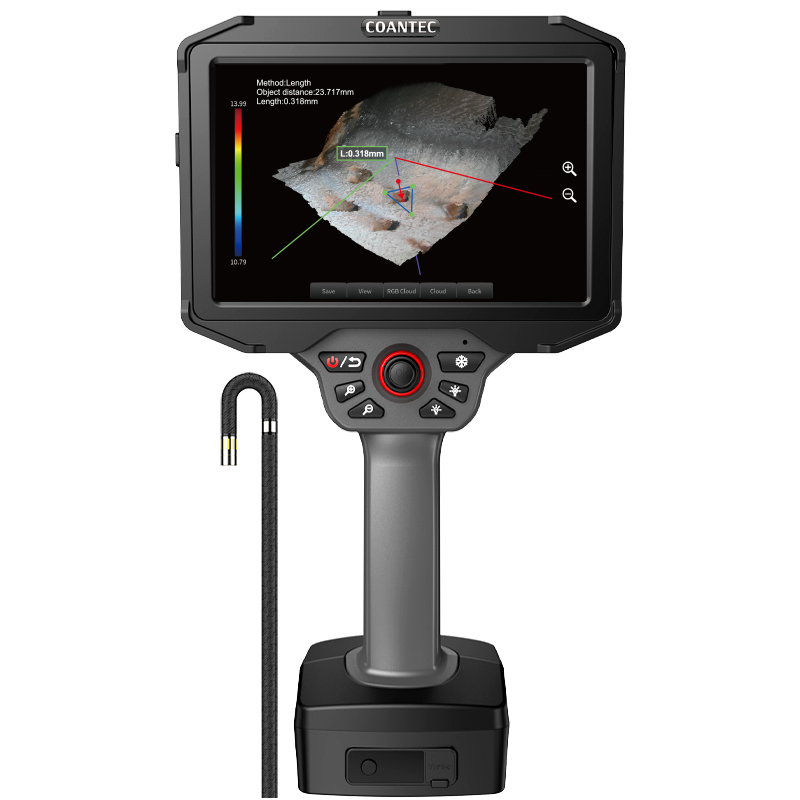
파이버스코프는 광섬유 다발을 사용하여 프로브의 말단 끝에서 관찰 끝으로 이미지를 전송하는 광학 검사 장비입니다.
전통적인 이미지 전송 광섬유경에서 섬유 다발에는 이미지의 공간 정보를 보존하기 위해 배열된 많은 개별 광섬유가 포함되어 있습니다. 각 광섬유는 이미지의 일부를 전달하므로 작업자는 접안렌즈를 통해 대상을 볼 수 있습니다.
광섬유경은 일반적으로 다음으로 구성됩니다.
유연한 삽입 튜브
말단부에 대물렌즈
이미지 전송 섬유 다발
접안렌즈 또는 관찰 시스템
종종 별도의 광원과 조명 섬유를 사용하는 조명 시스템
말단부를 조종하기 위한 일부 모델의 제어 메커니즘
유연한 프로브를 사용하면 좁은 통로, 곡선 채널, 접근이 제한된 내부 구조를 검사하는 데 광섬유경이 유용합니다.
전통적인 광섬유경은 유연성과 컴팩트한 광학 설계로 인해 가치가 높습니다. 그러나 이미지 품질은 이미지 섬유의 수, 밀도 및 상태에 따라 영향을 받을 수 있습니다. 깨진 섬유는 보는 이미지에 어두운 점이나 흠집으로 나타날 수 있습니다.
광섬유를 포함하는 모든 장비가 광섬유경인 것은 아니라는 점에 유의하는 것이 중요합니다. 일부 전자 비디오 내시경은 조명 전달에만 광섬유를 사용하는 반면 소형 카메라 센서는 이미지를 캡처합니다.
가장 중요한 차이점은 이미지가 전송되고 표시되는 방식입니다. 그러나 프로브 구성, 조작성, 이미지 문서화 및 검사 요구 사항도 어떤 장비가 더 적합한지에 영향을 미칩니다.
| 특징 | 산업용 비디오 내시경 | 전통적인 광섬유경 |
|---|---|---|
| 이미지 전송 | 전자 이미지 캡처 및 디지털 전송 | 광섬유 다발을 통한 광학 이미지 전송 |
| 이미지 디스플레이 | 전자 모니터 또는 휴대용 화면 | 일반적으로 접안렌즈 또는 광학 뷰어 |
| 이미지 품질 | 센서 해상도, 광학, 조명 및 처리에 따라 다름 | 광섬유 번들 품질, 광학, 조명 및 보기 시스템에 따라 다름 |
| 이미지 기록 | 일반적으로 디지털 사진 및 비디오를 지원합니다. | 보기 시스템과 사용 가능한 액세서리에 따라 다릅니다. |
| 프로브 유연성 | 견고하고 유연하며 관절형 설계로 제공됩니다. | 일반적으로 유연성 |
| 프로브 조종 | 관절식 모델에 사용 가능 | 일부 모델에서 사용 가능 |
| 측정 기능 | 일부 모델에서 사용 가능 | 일반적으로 추가 시스템이나 특수 설계가 필요합니다. |
| 이미지 전송 | 전자 | 전통적인 이미지 전송 광섬유경의 광학 |
| 일반적인 애플리케이션 | 엔진 검사, 터빈 검사, 장비 유지 보수 및 결함 문서화 | 좁은 통로, 곡선형 채널, 특수 광학 검사 업무 |
이는 보편적인 규칙이라기보다는 일반적인 특성입니다. 일부 고급 광섬유 내시경은 디지털 이미징 시스템에 연결할 수 있는 반면, 일부 산업용 비디오 내시경은 매우 특수한 용도로 설계되었습니다.
따라서 가장 좋은 비교는 제품 이름만 사용하기보다는 실제 장비 구성을 기반으로 해야 합니다.
이미지 품질은 산업 검사에서 가장 중요한 고려 사항 중 하나이며, 특히 검사관이 작은 균열, 부식, 표면 마모 또는 이물질 손상을 식별해야 하는 경우 더욱 그렇습니다.
비디오 내시경은 일반적으로 프로브의 말단부 근처에 위치한 전자 이미지 센서를 사용하여 검사 대상을 캡처합니다. 그런 다음 이미지가 처리되어 전자적으로 표시됩니다.
모델에 따라 이 아키텍처는 다음을 지원할 수 있습니다.
고해상도 정지 이미지
실시간 영상검사
디지털 줌 및 이미지 조정
사진 및 비디오 저장
유지관리 및 품질관리를 위한 검사기록
특화된 치수 측정 기능
실제 성능은 이미지 센서, 광학 설계, 조명, 작동 거리 및 이미지 처리 기능에 따라 달라집니다.
고해상도 디스플레이만으로는 기기가 모든 작은 결함을 감지할 수 있다고 보장하지 않습니다. 검사관은 광학 이미지의 선명도와 표적이 관찰되는 조건도 고려해야 합니다.
A traditional fiberscope transmits the image through a coherent optical fiber bundle. Its image quality depends on the number and density of fibers, the optical design, the condition of the bundle, and the quality of the illumination.
Fiberscopes can provide useful visual information in confined spaces, particularly where their flexible construction is advantageous. However, the fiber structure can limit image detail compared with some modern electronic imaging systems.
If individual fibers become damaged, dark spots may appear in the image. These artifacts can make it more difficult to distinguish small surface defects.
For applications requiring digital image storage, repeatable inspection records, and integration with modern inspection workflows, a video borescope is often the more practical option.
For specialized inspections where a very flexible optical probe is the priority, a fiberscope may remain suitable.
The correct choice depends on the smallest defect that must be identified, the working distance, the available access path, and the required inspection documentation.
Probe flexibility is another important factor when inspecting complex internal structures.
A traditional fiberscope generally uses a flexible insertion tube that can follow curved access paths. This makes it useful for inspecting narrow channels and internal passages that cannot be reached with a straight probe.
Flexible industrial video borescopes offer similar access advantages. Some models also feature articulating probe tips that allow the operator to steer the camera toward a target without repeatedly withdrawing and repositioning the insertion tube.
For example, a four-way articulating video borescope may allow the inspector to direct the probe tip in multiple directions, making it easier to examine different surfaces within a confined component.
When selecting an instrument for a restricted access point, consider the following factors:
Probe diameter: The insertion tube must fit through the available opening.
Working length: The probe must reach the target without excessive unused length.
Bend radius: The insertion tube must accommodate the access path without exceeding its operating limits.
Articulation: Tip steering may be important when the inspection target is not directly in front of the probe.
Distal-end design: The camera, lens, and illumination must suit the geometry of the inspection area.
Neither a fiberscope nor a video borescope is automatically better in every confined space. The required probe dimensions and steering capabilities should determine the final selection.
Both instruments can be used for visual inspection of internal structures, but their strengths may differ according to the inspection task.
Aircraft engines contain components such as turbine blades, compressor stages, combustion chambers, and other internal surfaces that require careful inspection.
A video borescope can be advantageous when inspectors need to capture images, document findings, and compare conditions during subsequent maintenance inspections.
A suitable articulating probe can help inspectors examine surfaces from different viewing angles.
The instrument must be selected according to the engine manufacturer's inspection procedures, access-port dimensions, required viewing direction, and applicable maintenance requirements.
In automotive maintenance, inspection scopes can help examine cylinder walls, piston crowns, valves, and other internal engine components.
A compact video borescope may provide a convenient way to observe internal conditions and record images for troubleshooting.
A fiberscope can also be suitable for certain restricted passages, particularly when its probe construction matches the access requirements.
Gas turbines and other power-generation equipment contain internal components that can be expensive or time-consuming to disassemble.
Video borescopes can help maintenance teams examine accessible internal surfaces and create visual inspection records.
For these applications, probe length, articulation, image clarity, illumination, and operating temperature limits are important selection criteria.
Industrial inspection scopes can help examine internal surfaces in castings, pipework, gearboxes, hydraulic systems, and other mechanical assemblies.
The appropriate instrument depends on the geometry of the component, the available opening, the inspection distance, and whether the target requires only visual observation or more detailed documentation.
For long pipelines or large industrial structures, a dedicated pipe inspection camera or robotic inspection system may be more appropriate than a conventional handheld borescope.
The purchase price of an industrial borescope or fiberscope depends on more than the basic imaging technology.
Important factors include probe diameter, insertion length, articulation, optical performance, illumination, durability, accessories, and measurement capabilities.
Traditional fiberscopes may be attractive for certain specialized inspection requirements, but the condition of the image fiber bundle is important. Damaged fibers can degrade the viewing image and may require professional repair or replacement.
Video borescopes can offer convenient digital recording and image management, but more advanced systems may involve higher initial costs, electronic components, batteries, displays, and software-related considerations.
Before purchasing, evaluate the total cost of ownership, including:
Initial purchase price
Expected service life
Probe repair or replacement costs
Cleaning and maintenance requirements
Calibration or verification requirements, where applicable
Accessories and software
Operator training
Inspection time and documentation requirements
For industrial applications, the most economical solution is not necessarily the instrument with the lowest purchase price. A tool that matches the inspection task and reduces repeated inspections or unnecessary equipment disassembly may provide greater long-term value.
Choosing between an industrial video borescope and a fiberscope starts with the inspection requirements rather than the product category.
Determine whether the task involves general visual observation, defect identification, digital documentation, or dimensional measurement.
For applications requiring repeatable digital inspection records, a video borescope is often a strong candidate.
Identify the maximum permissible probe diameter and the available insertion length.
Do not select an instrument based on diameter alone. The probe must also accommodate the access path and reach the inspection target.
Determine whether the target can be viewed through a straight access path or whether the operator must steer the probe around bends or obstructions.
A flexible probe may be sufficient for some applications, while an articulating tip may be necessary for others.
Consider the smallest defect that must be identified, the target's surface characteristics, the working distance, and the available illumination.
For critical inspections, evaluate actual sample images or perform a practical demonstration using representative inspection targets.
Confirm whether the probe must withstand moisture, oil, cleaning agents, elevated temperatures, or other environmental conditions.
Verify the manufacturer's specified operating limits and ingress-protection rating. Do not assume that every inspection scope is suitable for hazardous atmospheres or high-temperature environments.
If inspection results must be shared with customers, maintenance teams, or quality departments, check whether the instrument supports image storage, video recording, annotations, reporting, or specialized measurement.
Dimensional measurement requires appropriate instrument capabilities and operating procedures; a clear image alone does not establish measurement accuracy.
Consider product availability, technical support, accessories, repair services, and the availability of replacement probes.
Matching these factors to your inspection requirements helps ensure that the selected equipment remains practical throughout its service life.
Not exactly. Borescope is a broad term for instruments used to visually inspect inaccessible areas. A traditional fiberscope is a type of borescope that uses an optical fiber bundle to transmit the image. Industrial video borescopes instead capture images electronically using an image sensor.
Neither is universally better. A fiberscope may be suitable for specialized applications requiring a flexible optical probe. A video borescope is often more convenient when digital imaging, video recording, image sharing, and inspection documentation are important.
Yes, depending on its configuration. Some fiberscopes can be connected to camera systems or digital viewing accessories. However, digital recording is generally more straightforward with an electronic video borescope designed with built-in imaging and storage features.
An industrial video borescope is often a practical choice for aircraft engine inspections that require digital image documentation and articulating probe control. However, the appropriate instrument must meet the specific engine manufacturer's inspection requirements and applicable maintenance procedures.
The correct diameter depends on the access opening, the internal geometry, the required working distance, and the available probe design. Always confirm the actual dimensions and clearance requirements before selecting an instrument.
Some advanced industrial video borescopes offer specialized measurement functions. Their suitability depends on the measurement technology, calibration or verification procedures, target conditions, and required accuracy. Ordinary visual inspection should not be treated as equivalent to a validated dimensional measurement.
Follow the manufacturer's instructions for cleaning, handling, storage, and inspection. Clean the probe and distal-end optics using approved methods, avoid exceeding the specified bending limits, and inspect the insertion tube for signs of damage before and after use.
Industrial borescopes and fiberscopes both provide access to internal areas that are difficult to inspect directly, but their image-transmission technologies and operating features can differ considerably.
A traditional fiberscope uses a coherent optical fiber bundle to transmit images and can be suitable for specialized inspections requiring a flexible optical probe. An industrial video borescope captures images electronically and often provides advantages in digital recording, image management, and inspection documentation.
When choosing between the two, consider the inspection objective, probe diameter, working length, articulation, image quality, illumination, environmental requirements, and total cost of ownership.
저작권 © 2025.Coantec Ltd. 모든 권리 소유 사이트지도