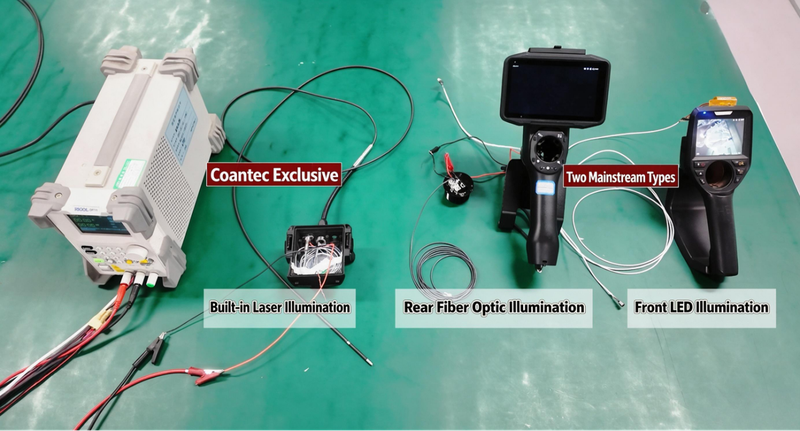

ما هي أنواع الإضاءة المستخدمة في المناظير الصناعية؟ مقارنة بين مصابيح LED والألياف الضوئية والليزر

2026-09-08

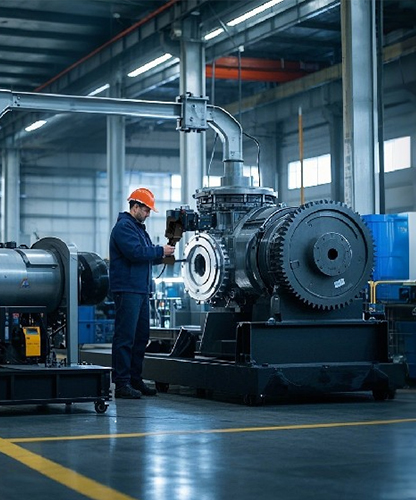
في صناعات مثل الطيران وتوربينات الغاز ومعالجة البتروكيماويات وتصنيع السيارات، توجد العديد من المكونات الحيوية داخل مساحات ضيقة أو مغلقة أو لا يمكن الوصول إليها بأي طريقة أخرى.

تتيح المناظير الصناعية للمفتشين الوصول إلى هذه المناطق من خلال أنبوب إدخال مرن وعرض الظروف الداخلية في الوقت الفعلي، مما يجعلها أداة فحص بصري أساسية للاختبارات غير المدمرة (NDT).
LED, Fiber-Optic and Laser Compared

ومع ذلك، فإن الحصول على صور فحص واضحة وموثوقة يعتمد على أكثر من مجرد الكاميرا والعناصر البصرية.

في معظم بيئات التفتيش الصناعي، تكون المنطقة التي يتم فحصها ذات إضاءة محيطة قليلة أو معدومة وقد تكون مظلمة تمامًا. ومن ثم فإن مقدار معلومات الصورة المفيدة التي يلتقطها نظام التصوير يعتمد بشكل كبير على الإضاءة المتوفرة في نقطة الفحص.

لهذا السبب، تعد الإضاءة جزءًا مهمًا من نظام التصوير بالمنظار الصناعي وأحد العوامل الرئيسية التي تؤثر على أداء الفحص في العالم الحقيقي.

إذًا، ما هي أنواع الإضاءة المستخدمة بشكل شائع في المناظير الصناعية؟ ما هي الاختلافات بين إضاءة LED والألياف الضوئية والليزر؟ وما هي التقنيات الأكثر ملاءمة لتطبيقات الفحص المختلفة؟

لماذا تحتاج المناظير الصناعية إلى الإضاءة؟

لفهم دور الإضاءة، من المفيد أولاً أن نفهم كيف يشكل المنظار الصناعي الصورة.

بعبارات بسيطة، مصدر الضوء ينير السطح المستهدف. تقوم بصريات البوريسكوب بجمع الضوء المنعكس، ويقوم مستشعر الصورة بتحويل تلك المعلومات البصرية إلى إشارات إلكترونية، والتي تتم بعد ذلك معالجتها وعرضها كصورة.

ولذلك يمكن تلخيص عملية التصوير على النحو التالي:

يضيء الضوء الهدف ← يدخل الضوء المنعكس إلى البصريات ← يلتقط مستشعر الصورة المعلومات ← معالجة الصور ← العرض

بدون إضاءة كافية، حتى مستشعر الصور عالي الدقة قد يواجه صعوبة في إنتاج صورة واضحة وقابلة للاستخدام.

وهذا مهم بشكل خاص في التفتيش الصناعي، حيث يحتاج المفتشون غالبًا إلى تحديد الميزات والعيوب السطحية الصغيرة جدًا. يمكن بسهولة إخفاء الشقوق والتآكل وأضرار الحروق والتآكل والخدوش على مكونات التوربين أو المحرك بسبب الإضاءة غير الكافية أو المناطق المظللة أو ضوضاء الصورة.

لذلك، لا ينبغي تقييم قدرة التصوير للمنظار الصناعي فقط من خلال الدقة أو حجم العرض. يجب أيضًا اعتبار أداء نظام الإضاءة والبصريات ومستشعر الصورة وتكنولوجيا معالجة الصور بمثابة نظام متكامل.

إضاءة LED: تقنية الإضاءة الأكثر شيوعًا في المناظير الصناعية

تعد إضاءة LED حاليًا حل الإضاءة الأكثر استخدامًا على نطاق واسع في المناظير الصناعية ومناظير الفيديو.

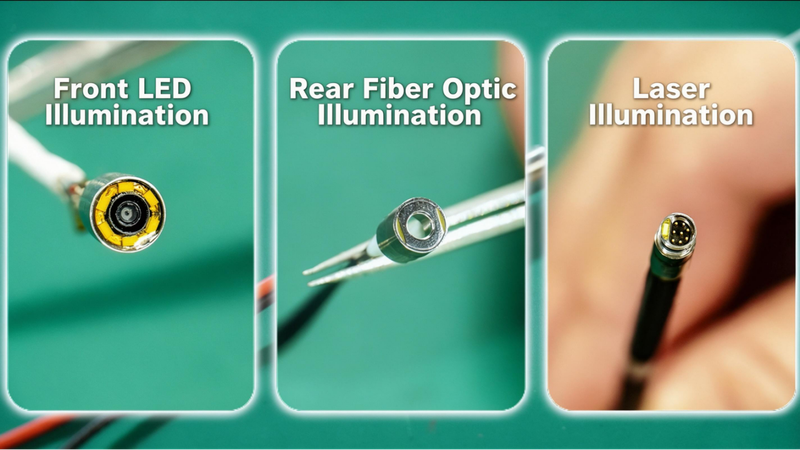
تتميز مصابيح LED بأنها مدمجة وموفرة للطاقة وطويلة الأمد وسهلة التحكم نسبيًا، مما يجعلها مناسبة بشكل خاص للمعدات ذات المساحة الداخلية المحدودة للغاية. في العديد من المناظير الصناعية، يتم دمج مصابيح LED المصغرة بالقرب من الكاميرا في الطرف البعيد لأنبوب الإدخال، مما يوفر إضاءة مباشرة لمنطقة الفحص.

بالنسبة لتطبيقات مثل فحص محركات السيارات، وفحص المكونات الميكانيكية، وفحص الأنابيب الداخلية، والصيانة الروتينية للمعدات، تكون مسافات الفحص عادةً قصيرة نسبيًا. في ظل هذه الظروف، يمكن لإضاءة LED أن تلبي متطلبات معظم عمليات الفحص البصري الروتينية.

جعلت هذه المزايا تقنية LED حل الإضاءة السائد في سوق المنظار الصناعي.

ومع ذلك، لا تعمل مصابيح LED بشكل جيد في كل بيئة فحص.

عندما تصبح مساحة الفحص أكبر وتزيد مسافة المشاهدة، ينتشر الضوء بشكل طبيعي على مساحة أوسع. وبالتالي يتم تقليل كمية الإضاءة المفيدة التي تصل إلى هدف بعيد. قد يحتاج المفتشون إلى إعادة وضع المسبار بشكل متكرر وتحريك الطرف البعيد بالقرب من الهدف للحصول على سطوع وتفاصيل كافية للصورة.

بالنسبة لبيئات الفحص الكبيرة والعميقة، يصبح تحسين الإضاءة الفعالة لمسافات طويلة تحديًا متزايد الأهمية.

إضاءة الألياف الضوئية: توصيل الضوء إلى النهاية البعيدة

على عكس مصابيح LED المثبتة مباشرة بالقرب من الكاميرا، تفصل إضاءة الألياف الضوئية مصدر الضوء عن الطرف البعيد للمنظار.

يمكن وضع مصدر الإضاءة في الوحدة الرئيسية أو في مصدر ضوء خارجي منفصل، بينما تنقل الألياف الضوئية الضوء إلى الطرف البعيد للجهاز.

لقد تم استخدام هذه التقنية منذ فترة طويلة في أنظمة الفحص بالمنظار الصناعية الاحترافية.

نظرًا لأن مصدر الضوء غير مقيد بالمساحة المحدودة للغاية المتوفرة عند طرف المسبار، يمكن للنظام توفير مرونة أكبر في اختيار مصادر إضاءة أعلى أو أكثر تخصصًا.

بالنسبة لتطبيقات الفحص الاحترافي ذات متطلبات الإضاءة الأعلى، يمكن لأنظمة الألياف الضوئية أن توفر مرونة أكبر في التصميم العام للنظام البصري.

ومع ذلك، يمكن لإضاءة الألياف الضوئية أيضًا أن تزيد من تعقيد النظام. يجب أن يكون مصدر الضوء وحزمة الألياف ونظام المنظار متصلين ومتطابقين بشكل صحيح، في حين أن التشغيل الميداني قد يتطلب معدات إضافية وتوصيلات ومتطلبات اقتران بصري.

ومن الناحية الفنية، تؤكد إضاءة الألياف الضوئية على الفصل بين مصدر الضوء والمسبار، مما يسمح بمزيد من المرونة في تكوين مصدر الضوء. وبالمقارنة، تركز إضاءة LED بشكل أكبر على التكامل المدمج والراحة.

إضاءة الليزر: لماذا تجذب الانتباه في التفتيش الصناعي؟

بالمقارنة مع إضاءة LED وإضاءة الألياف الضوئية التقليدية، تمثل إضاءة الليزر اتجاهًا تقنيًا أكثر تخصصًا في تطبيقات المنظار الصناعي.

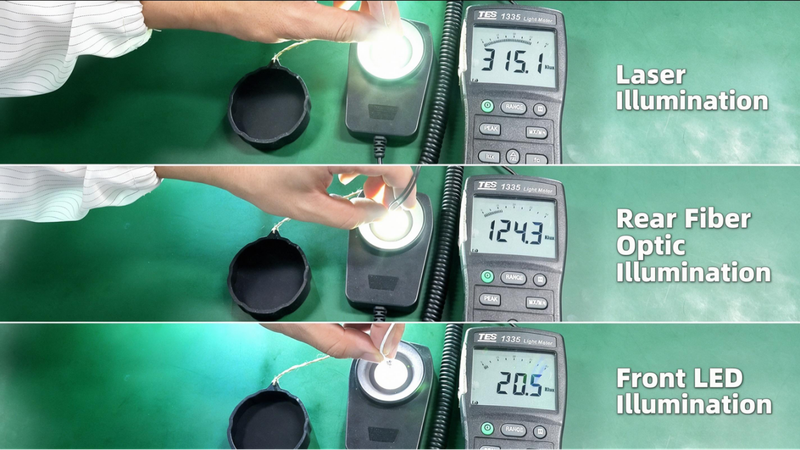
إحدى الخصائص الرئيسية لضوء الليزر هي اتجاهه القوي وتركيز الطاقة العالي.

In industries such as aerospace, gas turbines, petrochemical processing and automotive manufacturing, many critical components are located inside narrow, enclosed, or otherwise inaccessible spaces. Industrial borescopes enable inspectors to access these areas through a flexible insertion tube and display internal conditions in real time, making them an essential visual inspection tool for non-destructive testing (NDT). However, achieving clear and reliable inspection images depends on more than just the camera and optics. In most industrial inspection environments, the area being inspected has little or no ambient light and may be completely dark. The amount of useful image information captured by the imaging system therefore depends heavily on the illumination available at the inspection point. For this reason, illumination is a critical part of an industrial borescope imaging system and one of the key factors affecting real-world inspection performance. So, what types of illumination are commonly used in industrial borescopes? What are the differences between LED, fiber-optic and laser illumination? And which technologies are better suited to different inspection applications? Why Do Industrial Borescopes Need Illumination? To understand the role of illumination, it is helpful to first understand how an industrial borescope forms an image. In simple terms, the light source illuminates the target surface. The borescope optics collect the reflected light, and the image sensor converts that optical information into electronic signals, which are then processed and displayed as an image. The imaging process can therefore be summarized as: Light illuminates the target → Reflected light enters the optics → The image sensor captures the information → Image processing → Display Without sufficient illumination, even a high-resolution image sensor may struggle to produce a clear and usable image. This is particularly important in industrial inspection, where inspectors often need to identify very small surface features and defects. Cracks, corrosion, burn damage, erosion and scratches on turbine or engine components can easily be obscured by insufficient illumination, shadowed areas or image noise. Therefore, the imaging capability of an industrial borescope should not be evaluated solely by resolution or display size. The performance of the illumination system, optics, image sensor and image-processing technology must also be considered as an integrated system. LED Illumination: The Most Common Lighting Technology in Industrial Borescopes LED illumination is currently the most widely used lighting solution in industrial borescopes and videoscopes. LEDs are compact, energy-efficient, long-lasting and relatively easy to control, making them particularly suitable for equipment with extremely limited internal space. In many industrial borescopes, miniature LEDs are integrated close to the camera at the distal end of the insertion tube, providing direct illumination of the inspection area. For applications such as automotive engine inspection, mechanical component inspection, internal pipe inspection and routine equipment maintenance, inspection distances are typically relatively short. Under these conditions, LED illumination can meet the requirements of most routine visual inspections. These advantages have made LED technology the dominant illumination solution in the industrial borescope market. However, LEDs do not perform equally well in every inspection environment. As the inspection space becomes larger and the viewing distance increases, light naturally spreads over a wider area. The amount of useful illumination reaching a distant target is therefore reduced. Inspectors may need to reposition the probe repeatedly and move the distal end closer to the target in order to obtain sufficient image brightness and detail. For large and deep inspection environments, improving effective long-distance illumination therefore becomes an increasingly important challenge. Fiber-Optic Illumination: Delivering Light to the Distal End Unlike LEDs mounted directly near the camera, fiber-optic illumination separates the light source from the distal end of the borescope. The illumination source can be located in the main unit or in a separate external light source, while optical fibers transmit the light to the distal end of the instrument. This technology has long been used in professional industrial endoscopic inspection systems. Because the light source is not constrained by the extremely limited space available at the probe tip, the system can provide greater flexibility in selecting higher-output or more specialized illumination sources. For professional inspection applications with higher illumination requirements, fiber-optic systems can therefore offer greater flexibility in overall optical system design. However, fiber-optic illumination can also increase system complexity. The light source, fiber bundle and borescope system must be properly connected and matched, while field operation may involve additional equipment, connections and optical coupling requirements. From a technical perspective, fiber-optic illumination emphasizes the separation of the light source and the probe, allowing more flexibility in light-source configuration. LED illumination, by comparison, focuses more on compact integration and convenience. Laser Illumination: Why Is It Attracting Attention in Industrial Inspection? Compared with LED and conventional fiber-optic illumination, laser illumination represents a more specialized technical direction in industrial borescope applications. One of the key characteristics of laser light is its strong directionality and high energy concentration. This does not simply mean that a laser is “brighter than an LED.” More importantly, with appropriate optical design, laser energy can be directed and distributed more effectively toward the inspection target, creating new possibilities for illuminating objects at longer distances and in deep inspection environments. This can be particularly valuable when inspecting large and complex industrial equipment. For example, during the inspection of large aero engines, gas turbines and other complex equipment, the inspector may not always be observing a small target located close to the distal end of the borescope. Instead, the inspection target may include turbine blades, combustion chambers or other structures located within a large and deep internal space. If illumination is effective only at close range, the inspector may need to repeatedly reposition the insertion tube or divide a large inspection area into multiple sections. More effective long-distance illumination can make it possible to observe larger target areas from a more suitable working distance, creating additional flexibility for inspection in large and deep spaces. Therefore, the value of laser illumination is not simply about achieving higher brightness. Its real significance lies in improving illumination efficiency for specific long-distance and large-volume inspection environments where conventional lighting technologies may face limitations. Of course, laser illumination also requires careful optical system design. Industrial equipment often contains highly reflective metallic surfaces. Strong reflections can produce localized highlights or overexposure. For this reason, the laser illumination system must be properly matched with the optical design, image sensor and image-processing algorithms in order to deliver useful inspection performance. LED vs. Fiber-Optic vs. Laser Illumination: What Is the Difference? In practical applications, these three illumination technologies should not simply be classified as “advanced” or “outdated.” Instead, each represents a different technical approach designed for different inspection requirements.  Illumination Technology Key Characteristics Typical Applications  LED Illumination Compact, easy to integrate, mature technology Routine industrial inspection at short distances  Fiber-Optic Illumination Separates the light source from the probe and supports more flexible light-source configurations Professional inspections with higher illumination requirements  Laser Illumination Strong directionality and concentrated optical energy, offering potential advantages for long-distance illumination Large, deep and long-distance industrial inspection environments  Therefore, when selecting an industrial borescope, it is not accurate to assume that laser illumination is automatically better than LED illumination. For routine close-range inspection of mechanical components, LED illumination can provide stable and reliable performance. For specialized applications requiring greater illumination capability or longer observation distances, fiber-optic or laser-based solutions may offer additional advantages. The most suitable illumination technology depends on the inspection object, working distance, internal space and the specific characteristics of the defects being inspected. Why Are Modern Industrial Borescopes Moving Toward Multi-Source Illumination? As industrial inspection targets become increasingly complex, a single white-light source may not be sufficient for every application. Different materials and surface conditions reflect light differently. The same defect may also appear differently under different illumination conditions. As a result, some next-generation industrial borescopes are beginning to offer a wider range of specialized illumination options, including different wavelengths and illumination methods. The purpose of multi-source illumination is not simply to add more lights to the system. Its real value is to provide inspectors with more suitable observation conditions for different inspection objects and tasks. In other words, the key question is changing. In the past, the focus was often: “Is the light bright enough?” Today, the more important question is becoming: “What type of illumination can help the inspector identify the target features more effectively?” Industrial Borescope Illumination Is Evolving from “Lighting” to “Effective Imaging” The development of industrial borescope illumination reflects the changing requirements of industrial inspection. In the early stages, illumination primarily needed to solve one problem: Making the invisible visible. As high-definition imaging technology developed, the focus shifted toward: Seeing more clearly. Today, as industrial inspection increasingly involves large-scale equipment and intelligent visual inspection technologies, illumination systems must also address new requirements: Seeing farther. Seeing more. And working more effectively with imaging algorithms. As a result, the illumination system is no longer simply an independent light source module. It is becoming increasingly integrated into the overall imaging system. The light source determines how the target is illuminated. The optical system determines how reflected light is collected. The image sensor records the information, while image-processing algorithms influence how the final image is presented and analyzed. Only when these elements work together effectively can an industrial borescope deliver meaningful visual inspection performance. The Next Step for Laser Illumination: From Specialized Light Sources to Integrated Systems As laser illumination enters industrial borescope applications, one important development direction is miniaturization and system integration. Traditional professional laser illumination systems often rely on separate light-source modules. While this approach may be acceptable for large stationary inspection systems, it can reduce convenience and operational efficiency for handheld industrial borescopes designed for field inspection. The more equipment and connections required, the greater the impact on portability and ease of use. This raises an important technical question: Can the laser emission system be integrated directly into the handheld industrial borescope itself? This is not simply a matter of adding a laser to the device. Integrating a laser emission module into a handheld borescope requires careful consideration of power supply, thermal management, optical coupling, internal space and overall system reliability. For this reason, integrated laser illumination is fundamentally a test of a manufacturer's system-level engineering and integration capabilities. The Coantec BLX Series AI Industrial Borescope represents one approach to this development direction by integrating the laser emission module directly into the handheld main unit, combining laser illumination with the overall borescope system in a more compact design. Currently, Coantec BLX is the only integrated handheld industrial borescope solution in China that incorporates the laser emission module directly into the main unit. This development reflects a broader trend in which laser illumination is gradually evolving from a separate professional light-source technology toward more compact and portable industrial visual inspection systems. Conclusion: Clear Industrial Inspection Starts with the Right Light The primary purpose of an industrial borescope is to inspect areas that cannot be directly observed. However, the ability to achieve a clear inspection image depends on far more than the camera alone. From LED illumination to fiber-optic light transmission and laser illumination, different technologies have emerged in response to changing industrial inspection requirements. LED illumination meets the needs of most routine close-range inspections. Fiber-optic illumination provides greater flexibility for professional light-source configurations. Laser illumination, meanwhile, is opening new possibilities for long-distance, large-space and deep-cavity inspection. As aerospace engines, gas turbines and other high-end industrial equipment place increasingly demanding requirements on visual inspection, illumination will continue to evolve from a simple supplementary lighting function into a critical component of the overall imaging system. Future competition in industrial borescope technology will therefore extend beyond specifications such as resolution, display size and probe diameter. It will increasingly focus on the integration and coordination of: Illumination · Optics · Imaging · Algorithms · System Engineering The transition of laser illumination from specialized external light sources toward integrated handheld systems may become an important part of this evolution. A high-performance industrial borescope does more than help inspectors see inside. With the right illumination, it helps them see the details that truly matter.

وهذا لا يعني ببساطة أن الليزر "أكثر سطوعًا من مصابيح LED".

والأهم من ذلك، أنه من خلال التصميم البصري المناسب، يمكن توجيه طاقة الليزر وتوزيعها بشكل أكثر فعالية نحو هدف الفحص، مما يخلق إمكانيات جديدة لإضاءة الأشياء على مسافات أطول وفي بيئات الفحص العميق.

يمكن أن يكون هذا ذا قيمة خاصة عند فحص المعدات الصناعية الكبيرة والمعقدة.

على سبيل المثال، أثناء فحص المحركات الهوائية الكبيرة وتوربينات الغاز وغيرها من المعدات المعقدة، قد لا يراقب المفتش دائمًا هدفًا صغيرًا يقع بالقرب من الطرف البعيد للمنظار. وبدلاً من ذلك، قد يشمل هدف التفتيش شفرات التوربينات أو غرف الاحتراق أو غيرها من الهياكل الموجودة داخل مساحة داخلية كبيرة وعميقة.

إذا كانت الإضاءة فعالة فقط من مسافة قريبة، فقد يحتاج المفتش إلى إعادة وضع أنبوب الإدخال بشكل متكرر أو تقسيم منطقة فحص كبيرة إلى أقسام متعددة.

يمكن للإضاءة لمسافات طويلة الأكثر فعالية أن تجعل من الممكن مراقبة مناطق مستهدفة أكبر من مسافة عمل أكثر ملاءمة، مما يخلق مرونة إضافية للفحص في المساحات الكبيرة والعميقة.

لذلك، إن قيمة إضاءة الليزر لا تقتصر فقط على تحقيق سطوع أعلى. وتكمن أهميتها الحقيقية في تحسين كفاءة الإضاءة لبيئات فحص محددة لمسافات طويلة وكبيرة الحجم حيث قد تواجه تقنيات الإضاءة التقليدية قيودًا.

وبطبيعة الحال، تتطلب إضاءة الليزر أيضًا تصميمًا دقيقًا للنظام البصري.

غالبًا ما تحتوي المعدات الصناعية على أسطح معدنية عاكسة للغاية. يمكن أن تنتج الانعكاسات القوية إضاءات موضعية أو تعريضًا زائدًا. ولهذا السبب، يجب أن يتطابق نظام الإضاءة بالليزر بشكل صحيح مع التصميم البصري ومستشعر الصورة وخوارزميات معالجة الصور من أجل تقديم أداء فحص مفيد.

LED مقابل إضاءة الألياف الضوئية وإضاءة الليزر: ما الفرق؟

في التطبيقات العملية، لا ينبغي تصنيف تقنيات الإضاءة الثلاث هذه ببساطة على أنها "متقدمة" أو "قديمة".

وبدلاً من ذلك، يمثل كل منها نهجًا فنيًا مختلفًا مصممًا لمتطلبات التفتيش المختلفة.

In industries such as aerospace, gas turbines, petrochemical processing and automotive manufacturing, many critical components are located inside narrow, enclosed, or otherwise inaccessible spaces. Industrial borescopes enable inspectors to access these areas through a flexible insertion tube and display internal conditions in real time, making them an essential visual inspection tool for non-destructive testing (NDT). However, achieving clear and reliable inspection images depends on more than just the camera and optics. In most industrial inspection environments, the area being inspected has little or no ambient light and may be completely dark. The amount of useful image information captured by the imaging system therefore depends heavily on the illumination available at the inspection point. For this reason, illumination is a critical part of an industrial borescope imaging system and one of the key factors affecting real-world inspection performance. So, what types of illumination are commonly used in industrial borescopes? What are the differences between LED, fiber-optic and laser illumination? And which technologies are better suited to different inspection applications? Why Do Industrial Borescopes Need Illumination? To understand the role of illumination, it is helpful to first understand how an industrial borescope forms an image. In simple terms, the light source illuminates the target surface. The borescope optics collect the reflected light, and the image sensor converts that optical information into electronic signals, which are then processed and displayed as an image. The imaging process can therefore be summarized as: Light illuminates the target → Reflected light enters the optics → The image sensor captures the information → Image processing → Display Without sufficient illumination, even a high-resolution image sensor may struggle to produce a clear and usable image. This is particularly important in industrial inspection, where inspectors often need to identify very small surface features and defects. Cracks, corrosion, burn damage, erosion and scratches on turbine or engine components can easily be obscured by insufficient illumination, shadowed areas or image noise. Therefore, the imaging capability of an industrial borescope should not be evaluated solely by resolution or display size. The performance of the illumination system, optics, image sensor and image-processing technology must also be considered as an integrated system. LED Illumination: The Most Common Lighting Technology in Industrial Borescopes LED illumination is currently the most widely used lighting solution in industrial borescopes and videoscopes. LEDs are compact, energy-efficient, long-lasting and relatively easy to control, making them particularly suitable for equipment with extremely limited internal space. In many industrial borescopes, miniature LEDs are integrated close to the camera at the distal end of the insertion tube, providing direct illumination of the inspection area. For applications such as automotive engine inspection, mechanical component inspection, internal pipe inspection and routine equipment maintenance, inspection distances are typically relatively short. Under these conditions, LED illumination can meet the requirements of most routine visual inspections. These advantages have made LED technology the dominant illumination solution in the industrial borescope market. However, LEDs do not perform equally well in every inspection environment. As the inspection space becomes larger and the viewing distance increases, light naturally spreads over a wider area. The amount of useful illumination reaching a distant target is therefore reduced. Inspectors may need to reposition the probe repeatedly and move the distal end closer to the target in order to obtain sufficient image brightness and detail. For large and deep inspection environments, improving effective long-distance illumination therefore becomes an increasingly important challenge. Fiber-Optic Illumination: Delivering Light to the Distal End Unlike LEDs mounted directly near the camera, fiber-optic illumination separates the light source from the distal end of the borescope. The illumination source can be located in the main unit or in a separate external light source, while optical fibers transmit the light to the distal end of the instrument. This technology has long been used in professional industrial endoscopic inspection systems. Because the light source is not constrained by the extremely limited space available at the probe tip, the system can provide greater flexibility in selecting higher-output or more specialized illumination sources. For professional inspection applications with higher illumination requirements, fiber-optic systems can therefore offer greater flexibility in overall optical system design. However, fiber-optic illumination can also increase system complexity. The light source, fiber bundle and borescope system must be properly connected and matched, while field operation may involve additional equipment, connections and optical coupling requirements. From a technical perspective, fiber-optic illumination emphasizes the separation of the light source and the probe, allowing more flexibility in light-source configuration. LED illumination, by comparison, focuses more on compact integration and convenience. Laser Illumination: Why Is It Attracting Attention in Industrial Inspection? Compared with LED and conventional fiber-optic illumination, laser illumination represents a more specialized technical direction in industrial borescope applications. One of the key characteristics of laser light is its strong directionality and high energy concentration. This does not simply mean that a laser is “brighter than an LED.” More importantly, with appropriate optical design, laser energy can be directed and distributed more effectively toward the inspection target, creating new possibilities for illuminating objects at longer distances and in deep inspection environments. This can be particularly valuable when inspecting large and complex industrial equipment. For example, during the inspection of large aero engines, gas turbines and other complex equipment, the inspector may not always be observing a small target located close to the distal end of the borescope. Instead, the inspection target may include turbine blades, combustion chambers or other structures located within a large and deep internal space. If illumination is effective only at close range, the inspector may need to repeatedly reposition the insertion tube or divide a large inspection area into multiple sections. More effective long-distance illumination can make it possible to observe larger target areas from a more suitable working distance, creating additional flexibility for inspection in large and deep spaces. Therefore, the value of laser illumination is not simply about achieving higher brightness. Its real significance lies in improving illumination efficiency for specific long-distance and large-volume inspection environments where conventional lighting technologies may face limitations. Of course, laser illumination also requires careful optical system design. Industrial equipment often contains highly reflective metallic surfaces. Strong reflections can produce localized highlights or overexposure. For this reason, the laser illumination system must be properly matched with the optical design, image sensor and image-processing algorithms in order to deliver useful inspection performance. LED vs. Fiber-Optic vs. Laser Illumination: What Is the Difference? In practical applications, these three illumination technologies should not simply be classified as “advanced” or “outdated.” Instead, each represents a different technical approach designed for different inspection requirements.  Illumination Technology Key Characteristics Typical Applications  LED Illumination Compact, easy to integrate, mature technology Routine industrial inspection at short distances  Fiber-Optic Illumination Separates the light source from the probe and supports more flexible light-source configurations Professional inspections with higher illumination requirements  Laser Illumination Strong directionality and concentrated optical energy, offering potential advantages for long-distance illumination Large, deep and long-distance industrial inspection environments  Therefore, when selecting an industrial borescope, it is not accurate to assume that laser illumination is automatically better than LED illumination. For routine close-range inspection of mechanical components, LED illumination can provide stable and reliable performance. For specialized applications requiring greater illumination capability or longer observation distances, fiber-optic or laser-based solutions may offer additional advantages. The most suitable illumination technology depends on the inspection object, working distance, internal space and the specific characteristics of the defects being inspected. Why Are Modern Industrial Borescopes Moving Toward Multi-Source Illumination? As industrial inspection targets become increasingly complex, a single white-light source may not be sufficient for every application. Different materials and surface conditions reflect light differently. The same defect may also appear differently under different illumination conditions. As a result, some next-generation industrial borescopes are beginning to offer a wider range of specialized illumination options, including different wavelengths and illumination methods. The purpose of multi-source illumination is not simply to add more lights to the system. Its real value is to provide inspectors with more suitable observation conditions for different inspection objects and tasks. In other words, the key question is changing. In the past, the focus was often: “Is the light bright enough?” Today, the more important question is becoming: “What type of illumination can help the inspector identify the target features more effectively?” Industrial Borescope Illumination Is Evolving from “Lighting” to “Effective Imaging” The development of industrial borescope illumination reflects the changing requirements of industrial inspection. In the early stages, illumination primarily needed to solve one problem: Making the invisible visible. As high-definition imaging technology developed, the focus shifted toward: Seeing more clearly. Today, as industrial inspection increasingly involves large-scale equipment and intelligent visual inspection technologies, illumination systems must also address new requirements: Seeing farther. Seeing more. And working more effectively with imaging algorithms. As a result, the illumination system is no longer simply an independent light source module. It is becoming increasingly integrated into the overall imaging system. The light source determines how the target is illuminated. The optical system determines how reflected light is collected. The image sensor records the information, while image-processing algorithms influence how the final image is presented and analyzed. Only when these elements work together effectively can an industrial borescope deliver meaningful visual inspection performance. The Next Step for Laser Illumination: From Specialized Light Sources to Integrated Systems As laser illumination enters industrial borescope applications, one important development direction is miniaturization and system integration. Traditional professional laser illumination systems often rely on separate light-source modules. While this approach may be acceptable for large stationary inspection systems, it can reduce convenience and operational efficiency for handheld industrial borescopes designed for field inspection. The more equipment and connections required, the greater the impact on portability and ease of use. This raises an important technical question: Can the laser emission system be integrated directly into the handheld industrial borescope itself? This is not simply a matter of adding a laser to the device. Integrating a laser emission module into a handheld borescope requires careful consideration of power supply, thermal management, optical coupling, internal space and overall system reliability. For this reason, integrated laser illumination is fundamentally a test of a manufacturer's system-level engineering and integration capabilities. The Coantec BLX Series AI Industrial Borescope represents one approach to this development direction by integrating the laser emission module directly into the handheld main unit, combining laser illumination with the overall borescope system in a more compact design. Currently, Coantec BLX is the only integrated handheld industrial borescope solution in China that incorporates the laser emission module directly into the main unit. This development reflects a broader trend in which laser illumination is gradually evolving from a separate professional light-source technology toward more compact and portable industrial visual inspection systems. Conclusion: Clear Industrial Inspection Starts with the Right Light The primary purpose of an industrial borescope is to inspect areas that cannot be directly observed. However, the ability to achieve a clear inspection image depends on far more than the camera alone. From LED illumination to fiber-optic light transmission and laser illumination, different technologies have emerged in response to changing industrial inspection requirements. LED illumination meets the needs of most routine close-range inspections. Fiber-optic illumination provides greater flexibility for professional light-source configurations. Laser illumination, meanwhile, is opening new possibilities for long-distance, large-space and deep-cavity inspection. As aerospace engines, gas turbines and other high-end industrial equipment place increasingly demanding requirements on visual inspection, illumination will continue to evolve from a simple supplementary lighting function into a critical component of the overall imaging system. Future competition in industrial borescope technology will therefore extend beyond specifications such as resolution, display size and probe diameter. It will increasingly focus on the integration and coordination of: Illumination · Optics · Imaging · Algorithms · System Engineering The transition of laser illumination from specialized external light sources toward integrated handheld systems may become an important part of this evolution. A high-performance industrial borescope does more than help inspectors see inside. With the right illumination, it helps them see the details that truly matter.


تكنولوجيا الإضاءة

الخصائص الرئيسية

التطبيقات النموذجية

إضاءة LED

تقنية مدمجة وسهلة التكامل وناضجة

التفتيش الصناعي الروتيني على مسافات قصيرة

إضاءة الألياف الضوئية

يفصل مصدر الضوء عن المسبار ويدعم تكوينات مصدر الضوء الأكثر مرونة

عمليات التفتيش المهنية مع متطلبات الإضاءة أعلى

إضاءة الليزر

اتجاهية قوية وطاقة بصرية مركزة، مما يوفر مزايا محتملة للإضاءة لمسافات طويلة

بيئات التفتيش الصناعية الكبيرة والعميقة والمسافات الطويلة

لذلك، عند اختيار المنظار الصناعي، ليس من الدقة افتراض أن إضاءة الليزر أفضل تلقائيًا من إضاءة LED.

لإجراء فحص روتيني قريب المدى للمكونات الميكانيكية، يمكن أن توفر إضاءة LED أداءً مستقرًا وموثوقًا. بالنسبة للتطبيقات المتخصصة التي تتطلب قدرة إضاءة أكبر أو مسافات مراقبة أطول، قد توفر الحلول المعتمدة على الألياف الضوئية أو الليزر مزايا إضافية.

تعتمد تقنية الإضاءة الأكثر ملاءمة على كائن الفحص ومسافة العمل والمساحة الداخلية والخصائص المحددة للعيوب التي يتم فحصها.

لماذا تتجه المناظير الصناعية الحديثة نحو الإضاءة متعددة المصادر؟

نظرًا لأن أهداف التفتيش الصناعي أصبحت معقدة بشكل متزايد، فقد لا يكون مصدر الضوء الأبيض واحدًا كافيًا لكل تطبيق.

تعكس المواد المختلفة وظروف السطح الضوء بشكل مختلف. قد يظهر نفس العيب أيضًا بشكل مختلف في ظل ظروف الإضاءة المختلفة.

ونتيجة لذلك، بدأت بعض المناظير الصناعية من الجيل التالي في تقديم نطاق أوسع من خيارات الإضاءة المتخصصة، بما في ذلك الأطوال الموجية المختلفة وطرق الإضاءة.

الغرض من الإضاءة متعددة المصادر ليس مجرد إضافة المزيد من الأضواء إلى النظام.

وتتمثل قيمته الحقيقية في تزويد المفتشين بظروف مراقبة أكثر ملاءمة لأشياء ومهام التفتيش المختلفة.

وبعبارة أخرى، فإن السؤال الرئيسي يتغير.

في الماضي، كان التركيز في كثير من الأحيان:

"هل الضوء ساطع بما فيه الكفاية؟"

واليوم أصبح السؤال الأهم:

"ما هو نوع الإضاءة الذي يمكن أن يساعد المفتش في تحديد المعالم المستهدفة بشكل أكثر فعالية؟"

إضاءة البوريسكوب الصناعي تتطور من "الإضاءة" إلى "التصوير الفعال"

يعكس تطوير إضاءة المنظار الصناعي المتطلبات المتغيرة للتفتيش الصناعي.

في المراحل المبكرة، كانت الإضاءة ضرورية في المقام الأول لحل مشكلة واحدة:

جعل غير المرئي مرئيا.

ومع تطور تكنولوجيا التصوير عالي الوضوح، تحول التركيز نحو:

رؤية أكثر وضوحا.

اليوم، نظرًا لأن الفحص الصناعي يتضمن بشكل متزايد معدات واسعة النطاق وتقنيات الفحص البصري الذكية، يجب أن تلبي أنظمة الإضاءة أيضًا المتطلبات الجديدة:

رؤية أبعد. رؤية المزيد. والعمل بشكل أكثر فعالية مع خوارزميات التصوير.

ونتيجة لذلك، لم يعد نظام الإضاءة مجرد وحدة مصدر ضوء مستقلة. لقد أصبح مدمجًا بشكل متزايد في نظام التصوير الشامل.

يحدد مصدر الضوء كيفية إضاءة الهدف. يحدد النظام البصري كيفية جمع الضوء المنعكس. يقوم مستشعر الصورة بتسجيل المعلومات، بينما تؤثر خوارزميات معالجة الصور على كيفية عرض الصورة النهائية وتحليلها.

فقط عندما تعمل هذه العناصر معًا بشكل فعال، يمكن للمنظار الصناعي تقديم أداء فحص بصري مفيد.

الخطوة التالية لإضاءة الليزر: من مصادر الضوء المتخصصة إلى الأنظمة المتكاملة

مع دخول إضاءة الليزر إلى تطبيقات المنظار الصناعي، فإن أحد اتجاهات التطوير المهمة هو التصغير وتكامل النظام.

غالبًا ما تعتمد أنظمة الإضاءة بالليزر الاحترافية التقليدية على وحدات منفصلة لمصدر الضوء. في حين أن هذا النهج قد يكون مقبولاً لأنظمة التفتيش الثابتة الكبيرة، إلا أنه يمكن أن يقلل من الراحة والكفاءة التشغيلية للمناظير الصناعية المحمولة المصممة للفحص الميداني.

كلما زادت المعدات والاتصالات المطلوبة، زاد التأثير على قابلية النقل وسهولة الاستخدام.

وهذا يثير سؤالاً تقنيًا مهمًا:

هل يمكن دمج نظام انبعاث الليزر مباشرة في المنظار الصناعي المحمول نفسه؟

هذه ليست مجرد مسألة إضافة ليزر إلى الجهاز.

يتطلب دمج وحدة انبعاث الليزر في المنظار المحمول دراسة متأنية لإمدادات الطاقة، والإدارة الحرارية، والاقتران البصري، والمساحة الداخلية، وموثوقية النظام بشكل عام.

لهذا السبب، تعتبر إضاءة الليزر المتكاملة في الأساس اختبارًا لقدرات الشركة المصنعة في مجال الهندسة والتكامل على مستوى النظام.

يمثل Coantec BLX Series AI Industrial Borescope أحد الأساليب في اتجاه التطوير هذا من خلال دمج وحدة انبعاث الليزر مباشرة في الوحدة الرئيسية المحمولة، والجمع بين إضاءة الليزر ونظام المنظار الشامل في تصميم أكثر إحكاما.

حاليًا، يعتبر Coantec BLX هو الحل المتكامل الوحيد للمنظار الصناعي المحمول في الصين والذي يتضمن وحدة انبعاث الليزر مباشرة في الوحدة الرئيسية.

يعكس هذا التطور اتجاهًا أوسع حيث تتطور إضاءة الليزر تدريجيًا من تقنية مصدر ضوء احترافية منفصلة إلى أنظمة فحص بصرية صناعية أكثر إحكاما وقابلة للحمل.

الخلاصة: الفحص الصناعي الواضح يبدأ بالضوء المناسب

الغرض الأساسي من المنظار الصناعي هو فحص المناطق التي لا يمكن ملاحظتها بشكل مباشر. ومع ذلك، فإن القدرة على تحقيق صورة فحص واضحة تعتمد على ما هو أكثر بكثير من الكاميرا وحدها.

من إضاءة LED إلى نقل الضوء بالألياف الضوئية وإضاءة الليزر، ظهرت تقنيات مختلفة استجابة لمتطلبات التفتيش الصناعي المتغيرة.

تلبي إضاءة LED احتياجات معظم عمليات الفحص الروتينية من مسافة قريبة. توفر إضاءة الألياف الضوئية مرونة أكبر لتكوينات مصدر الضوء الاحترافية. وفي الوقت نفسه، تفتح الإضاءة بالليزر إمكانيات جديدة للفحص لمسافات طويلة ومساحة كبيرة وتجويف عميق.

نظرًا لأن محركات الطيران وتوربينات الغاز وغيرها من المعدات الصناعية المتطورة تفرض متطلبات متزايدة على الفحص البصري، فسوف تستمر الإضاءة في التطور من وظيفة إضاءة تكميلية بسيطة إلى مكون حاسم في نظام التصوير الشامل.

وبالتالي فإن المنافسة المستقبلية في تكنولوجيا المنظار الصناعي سوف تمتد إلى ما هو أبعد من المواصفات مثل الدقة وحجم العرض وقطر المسبار.

وسيركز بشكل متزايد على التكامل والتنسيق بين:

الإضاءة · البصريات · التصوير · الخوارزميات · هندسة النظم

قد يصبح انتقال إضاءة الليزر من مصادر الضوء الخارجية المتخصصة نحو الأنظمة المحمولة المدمجة جزءًا مهمًا من هذا التطور.

يقوم المنظار الصناعي عالي الأداء بأكثر من مجرد مساعدة المفتشين على الرؤية بالداخل. ومع الإضاءة الصحيحة، فإنها تساعدهم على رؤية التفاصيل المهمة حقًا.
flora@chinavideoscope.com

+86-755-89728626

+86 13714520051